
Constructing a Beach Volleyball Court
NOTE: This. instruction set is copyrighted and is not to be copied, forwarded, or re-posted without written permission from VolleyballUSA.com
To place orders or ask questions please call toll free 1-800-494-3933 Monday through Friday 8-6 PST!

Constructing a Beach Volleyball Court
(1) Suggested Playing Area:
The most common beach volleyball area we specify for beach volleyball courts is 50’ x 80’. This playing area consists of the traditional size court of 30’x 60’ with a and a safety space around it measuring 10 feet in each direction. Some things to point out if you would like more room for serving you can increase the area to 50’ x 100’. The FIVB specifies a 20’ safety buffer around their courts so if you prefer to follow this guideline you would be building an area 70’ x 100’. The other benefits of large sand areas is that they create areas for spectators / friends to set beach chairs, umbrellas and tents up in the sand. You can use this space to warm up if you are getting ready to play a follow-up match.
If you don't have or want to allocate so much space for a court, smaller courts can be built. The newer 2 on 2 court size is 26’3” x 52’6” so adding a 10’ buffer around that space would result in a 46’3” x 72’6” area. You can reduce this buffer further. The smallest buffer we like to see is 3’. You still need to give players a space to play a ball landing on the boundary line and if gets much closer we see more twisted ankles and other injuries from players contacting the edge of the sand and other material by accident.
In addition, if you have or want to allocate even less space for a sand volleyball court this is completely possible. In fact, there is a lot of evidence that playing volleyball on a smaller size court can help you get a lot better compared to playing on full size courts. Smaller courts tend to have lower nets so players can hit the ball down into a smaller size court. The lower net coupled with the fact that you are touching the volleyball more often since it travels a shorter distance means you get more repetition with the sport, your ball control gets better, you get to hit and block on a lower net so when you shift to the larger court many things feel easier since you have more space and time in plays. Many smaller courts we see built are around 15’ x 44’. The historic baby court at the Outrigger Canoe Club had several professional and Olympic volleyball players grow up playing lots of volleyball on a small court.
The space above the playing area should be free of obstructions. Try not to have trees nearby which will deposit debris onto your sand. The playing area should be level and consist of good quality sand to a thickness which prevents players from contacting the underlying surface.
 Standard Beach Court Dimensions
 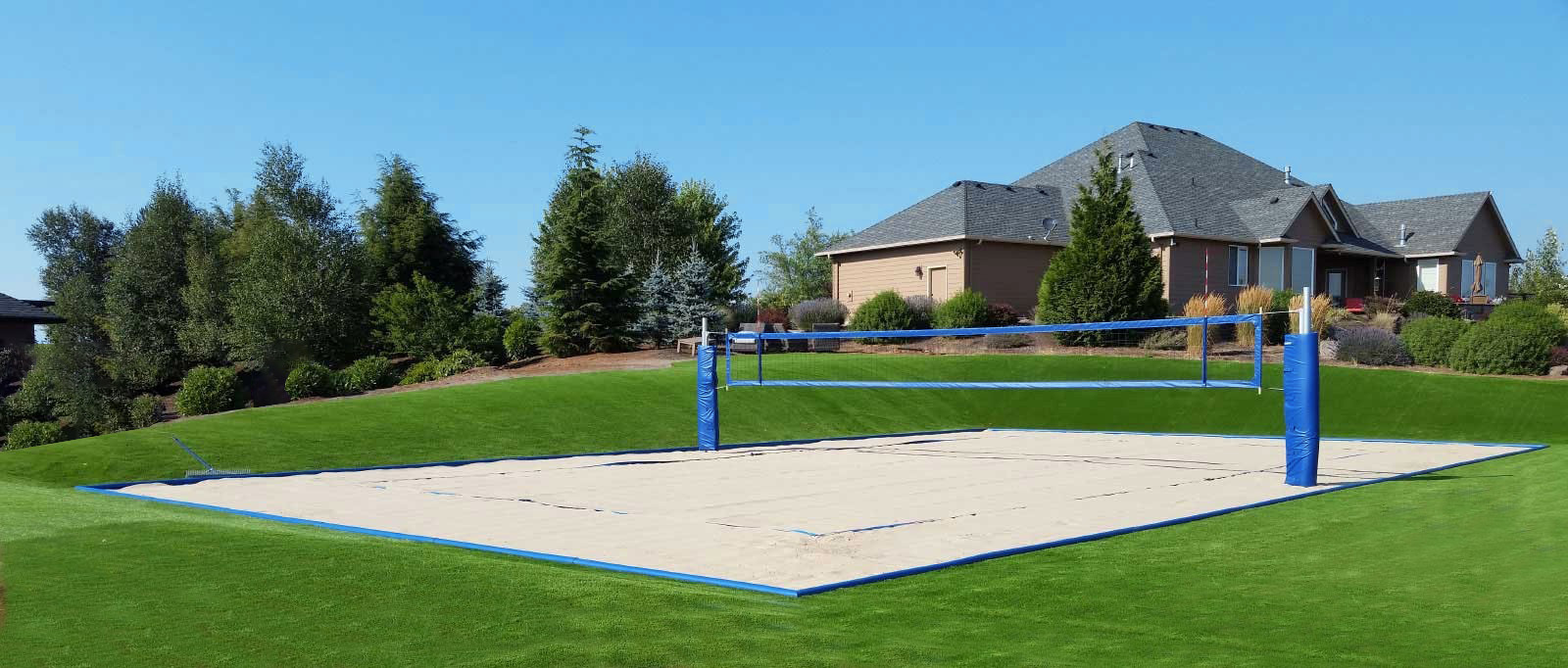 Artificial Turf Home Court with EdgeGuard™
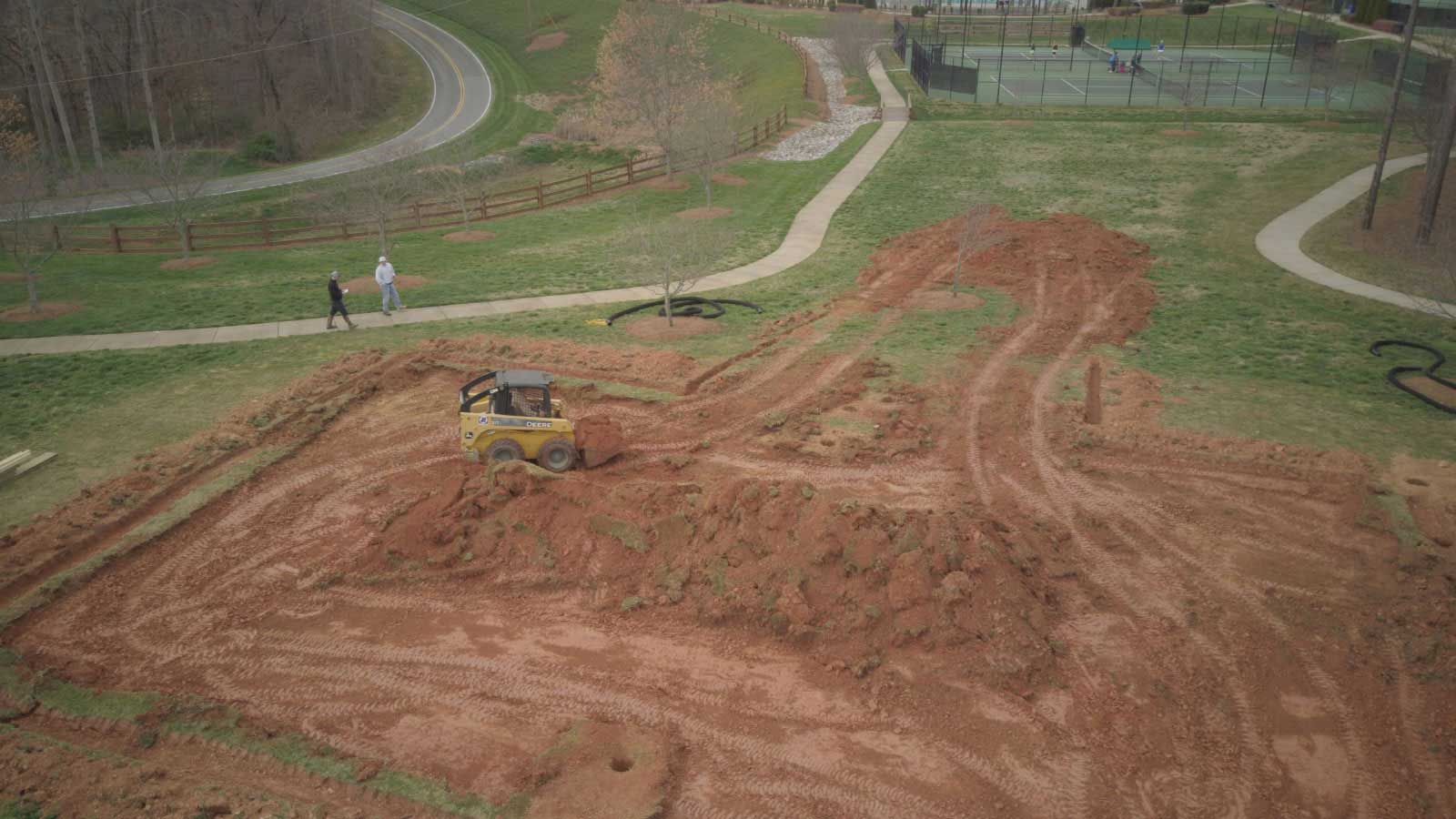
 Site Preparation
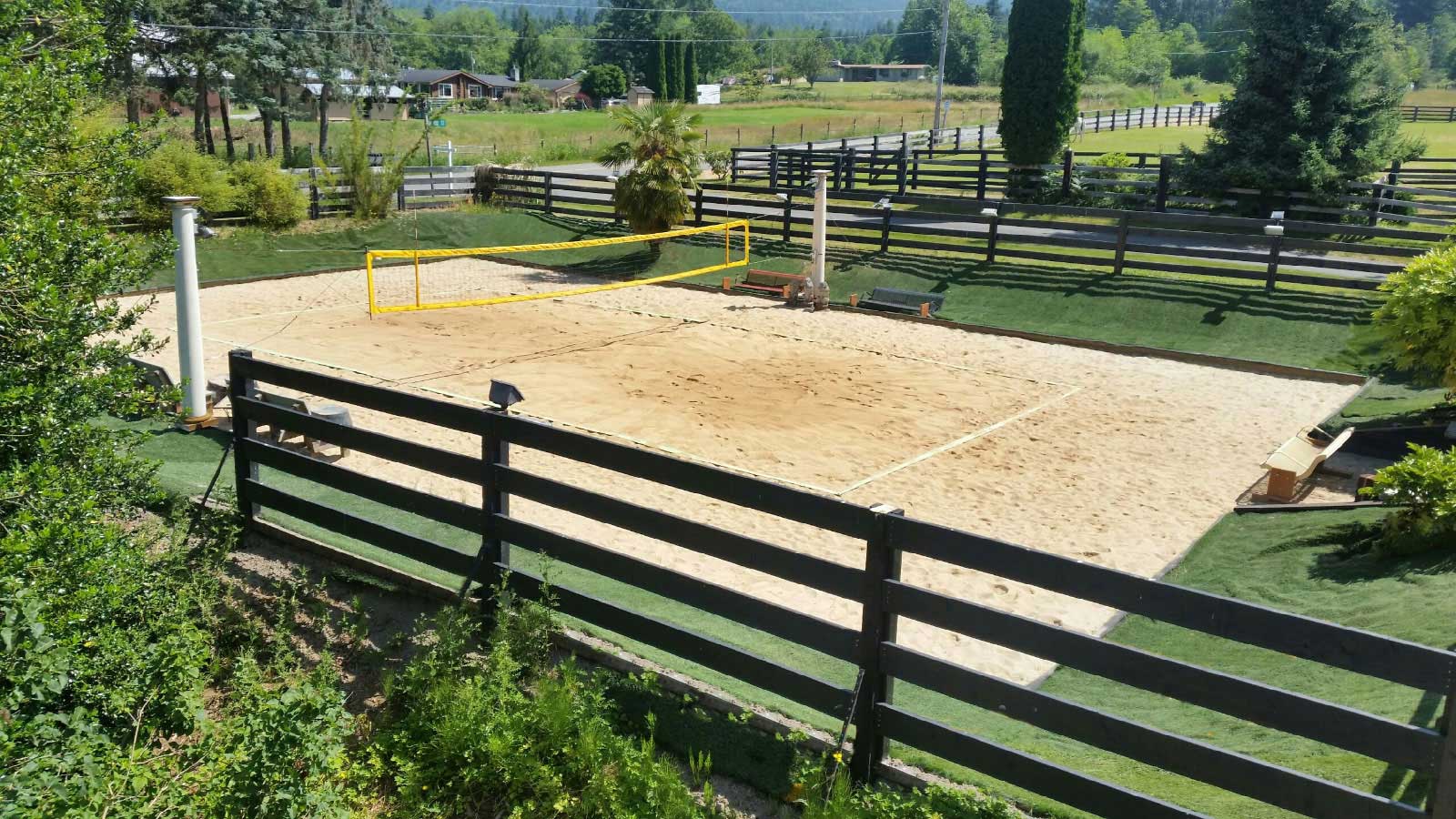 Below Grade Home Court
 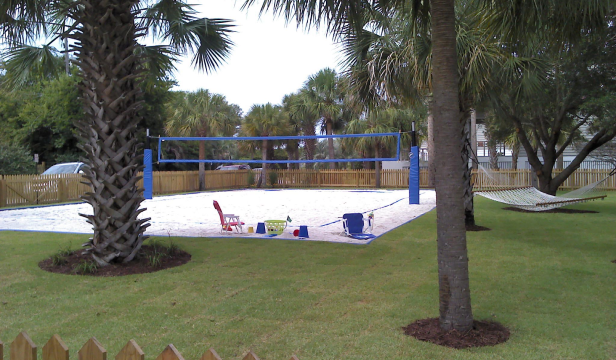 Flush Grade Backyard Sand Volleyball Court
 (2) Court Dimensions:
Official dimensions of the court are 29'6" feet by 59' feet and are measured from the outer edge of the boundary lines. The new 2 on 2 court size is 26'3" x 52'6". (We still prefer to build to the 6 on 6 court size so our courts accommodate both sizes and in case the 2 on 2 court size returns to the larger size.)
The boundary lines should be made of brightly colored tape or rope having similar characteristics (Note: Ropes can sometimes leave burns if you contact them accidentally, thick 2" wide webbing is what is recommended and what the professionals use). (For safety reasons we recommend removing the lines at night to protect people from tripping and injuring themselves). The plane of the net serves as an invisible center line of the court, dividing it into two halves.
(3) Site Preparation:
We recommend building sand volleyball courts above grade if your surrounding soil becomes wet throughout the year. It’s nice to take the surrounding area and gently grade a slope upwards towards the volleyball sand, sand preservation fabric and gravel added to the existing area.
We do not want any dirty water contaminating the volleyball sand over time. This dirty water continuously adds silt, clay and dust to your volleyball sand every time it rains and will lead to packing and players breathing additional dust with use. Once this dust enters the sand it typically stays and will result in you having to completely replace all of your volleyball sand as the problem gets worse and worse.
If you must build your court in the ground we suggest installing a French drain around the sand with the goal of directing that dirty water away from your volleyball sand. If there is some slope to the area it’s the most important to build the French drain on the high side of the court as this is where most of the dirty water running downhill will try to mix with your volleyball sand. In addition, you can install a plastic sheet barrier vertically to try and reduce contamination also but be aware this dirty water may work its way into your sand from below the court through the gravel and sand preservation fabric.
Below the court you can install several inches up to several feet of round drain rock to prevent dirty ground water from contaminating your sand from below. Angular shaped drain rock is ok but if players happen to contact the gravel through the sand preservation fabric the round drain rock is less abrasive to the skin. The drain rock below will also allow for rain to cleanse your sand of dust giving it a place to go after washing through your volleyball sand.
In some parts of the world, it is recommended to install thick plastic sheeting under your sand to prevent dirty ground water from contaminating your sand from below. We recommend working with a local civil engineer to determine the best way of draining your court in an environment with a lot of ground water. Sump pumps and drywells may be needed.
When you are ready to begin construction, we recommend calling an underground detection company to check your proposed court area for underground utilities before starting excavation.
Courts built below grade should have an area excavated to a 1-1/2 to 3 foot depth depending on how well your future court site drains. Within the court you will need to install single or multiple drainage ditches leading away from the lowest point of the court. Schedule 40 perforated drainpipes should be laid across the court with a clean out on the high side and the other open to the drainage ditch. (Do not use corrugated drainpipe. It tends to collapse under the weight of the sand and will not drain properly once collapsed.) Proper drainage is extremely important! You could find yourself playing in a giant mud puddle without it. (Even if the court is built above ground, sand will still retain water if the ground below is completely saturated!)
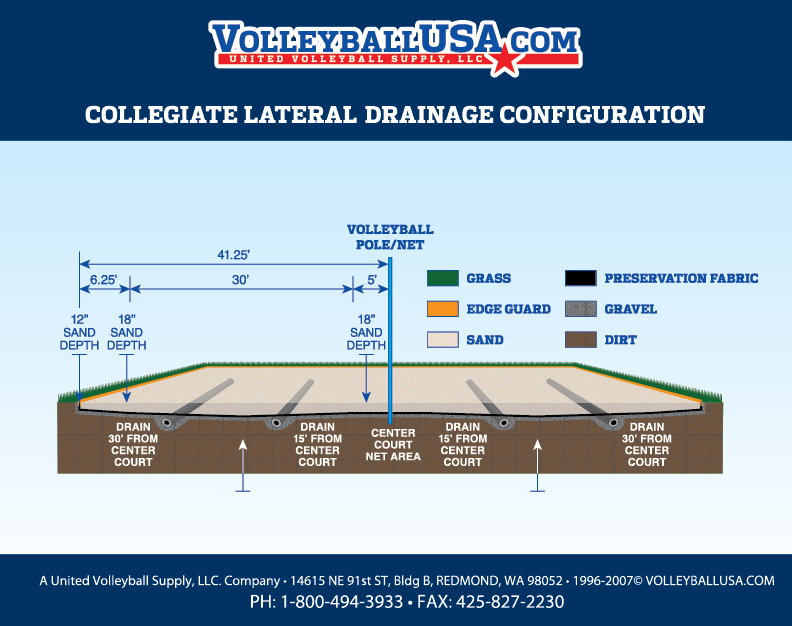 Lateral Court Drainage Configuration
 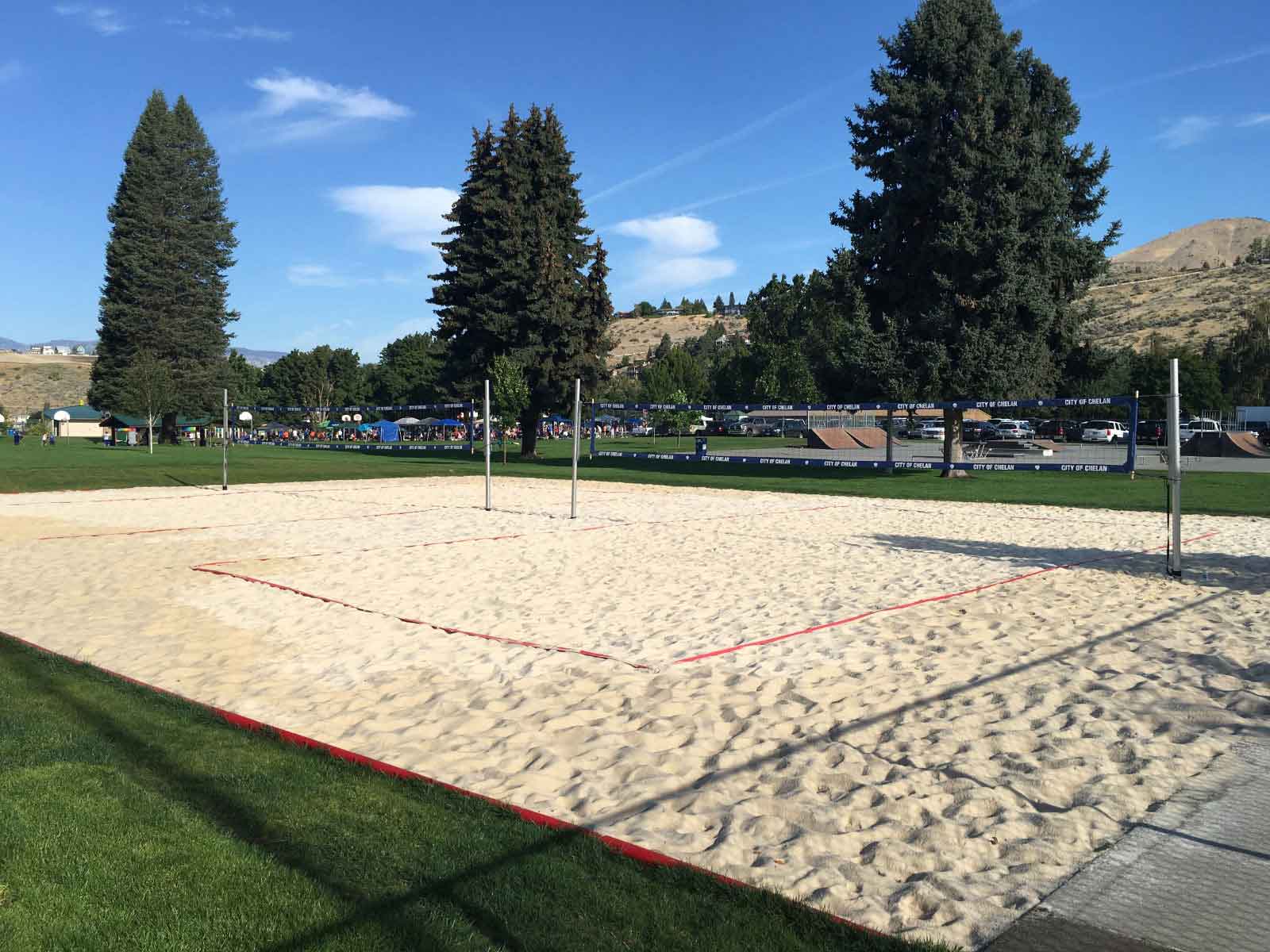 City Park Beach Volleyball Court
 (4) Court Drainage PVC & Gravel:
4. Court Drainage PVC & Gravel: Depending on how well your soil drains install a few inches to a one-foot thickness of pea gravel or round drain rock. (If your budget is tight, place pea gravel just around the perforated drainpipe but make sure the surrounding dirt funnels to the drainpipes. Pea gravel around the perforated PVC pipe is important to prevent the holes in the PVC pipe from plugging with fine sand, dust, silt and clay.
Above the pea gravel place United Volleyball Supply’s Sand Preservation FabricTM to prevent sand from washing through into the base gravel. (United Volleyball Supply has tested over 30 different types of geo-textile fabrics to insure that the money you spend on sand isn't washed away with rain. Different fabrics are made for different types of soil. Some fabrics are designed to not allow to flow through at all. Most of these fabrics are black so they all look very similar.
If you would like to purchase our recommended Sand Preservation FabricTM from us please call 1-800-494-3933. (We have an nationwide distribution network and can deliver to your job site prior to your other volleyball equipment arriving.) (Do not purchase soil separation fabric from local hardware stores. Their fabric is not thick enough to prevent sand loss)
Finding Sand
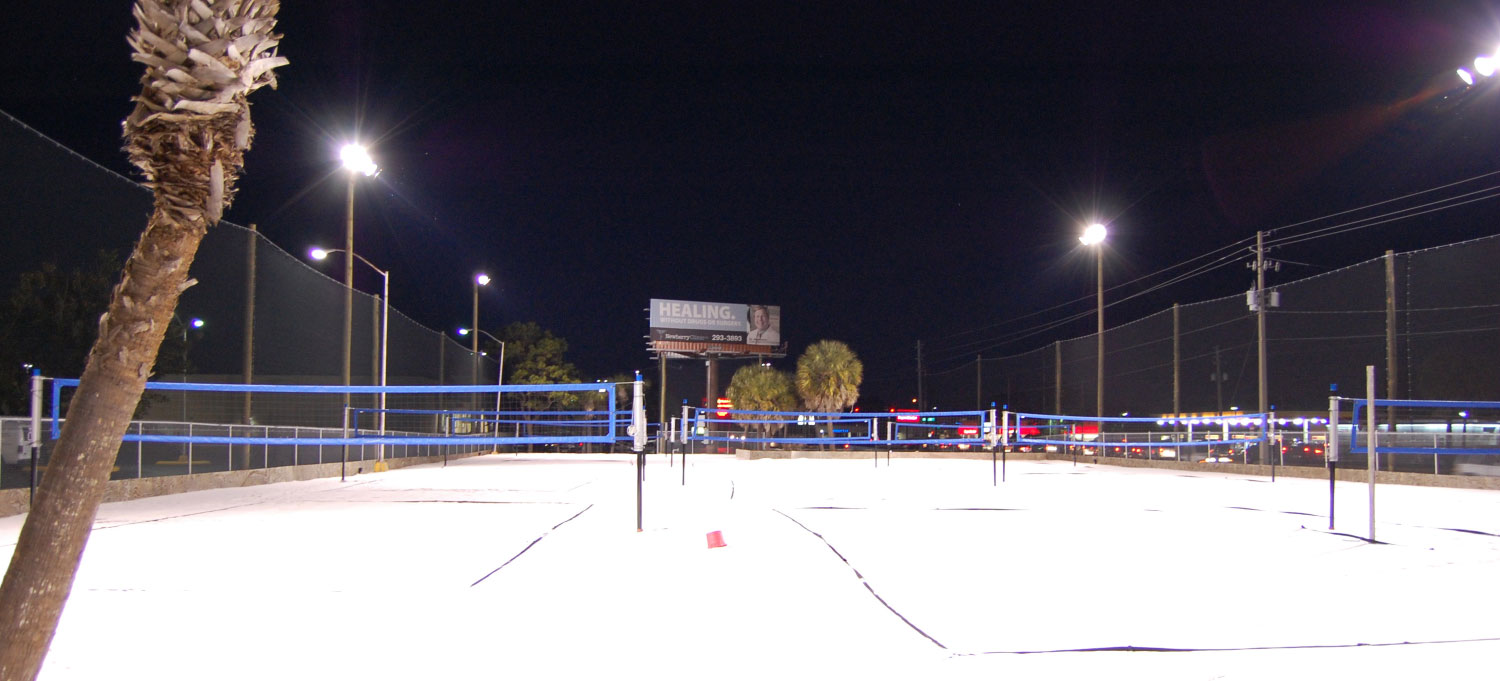
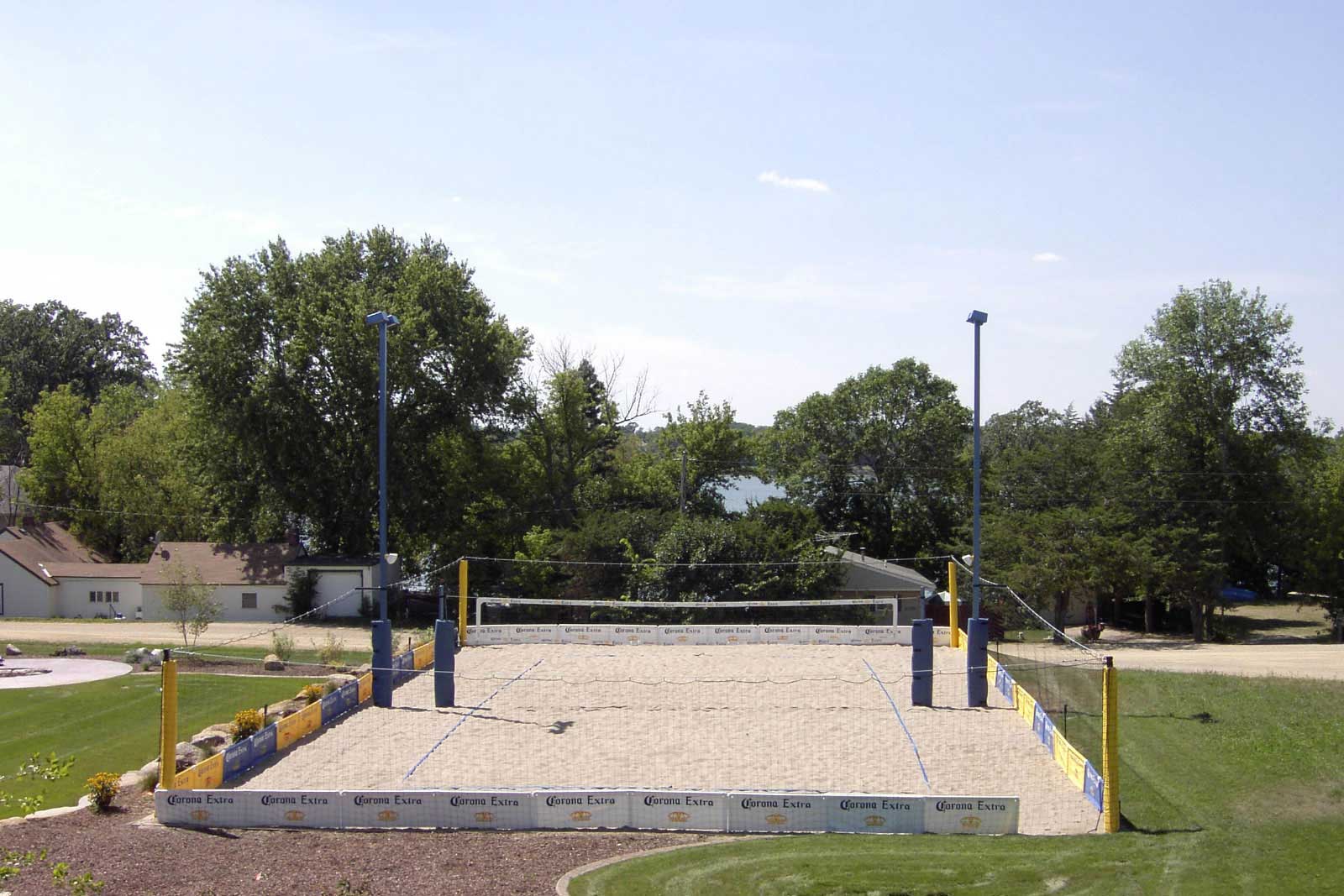 Professional Beach Court with Lighting and Court Enclosures
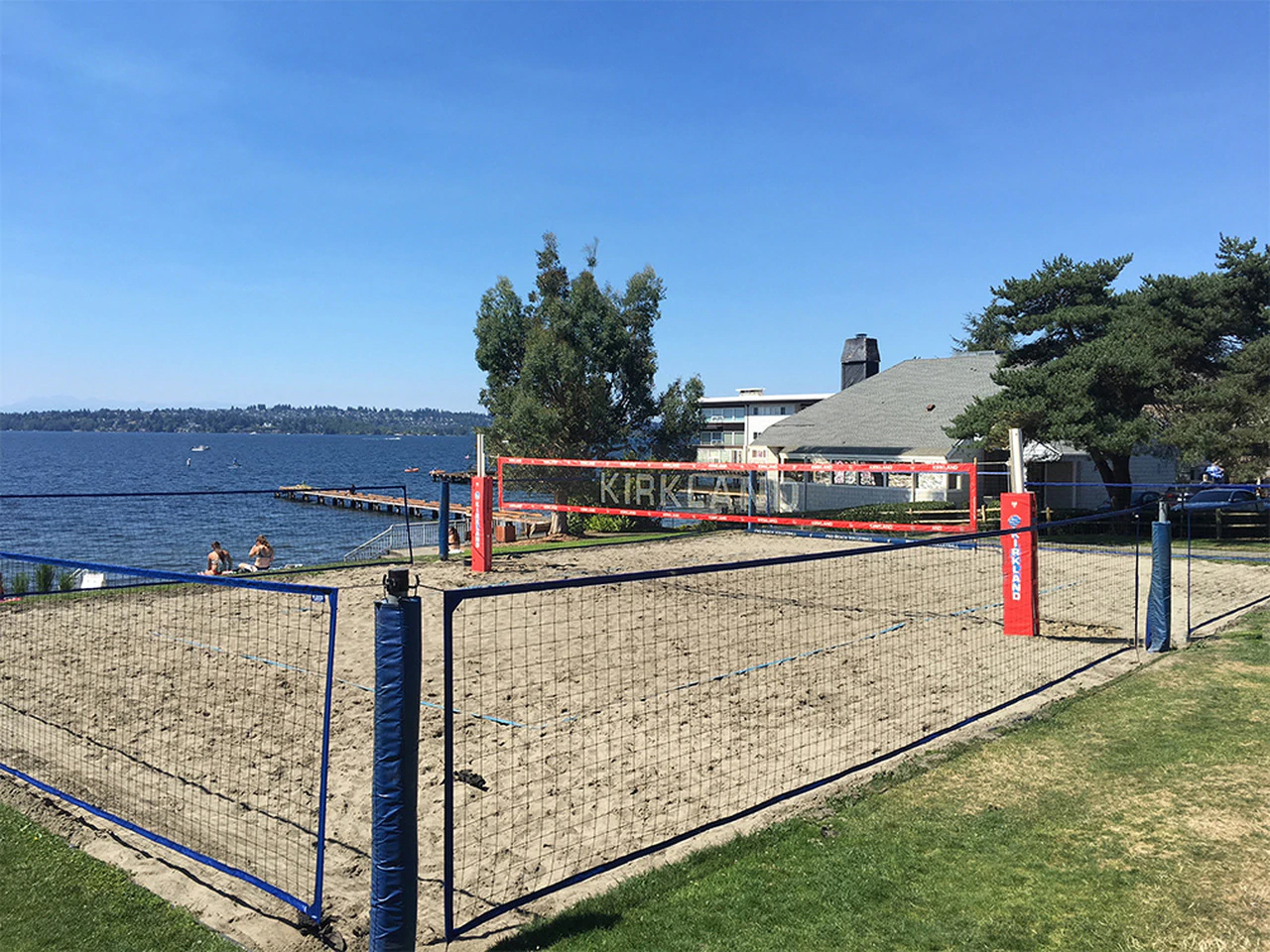
 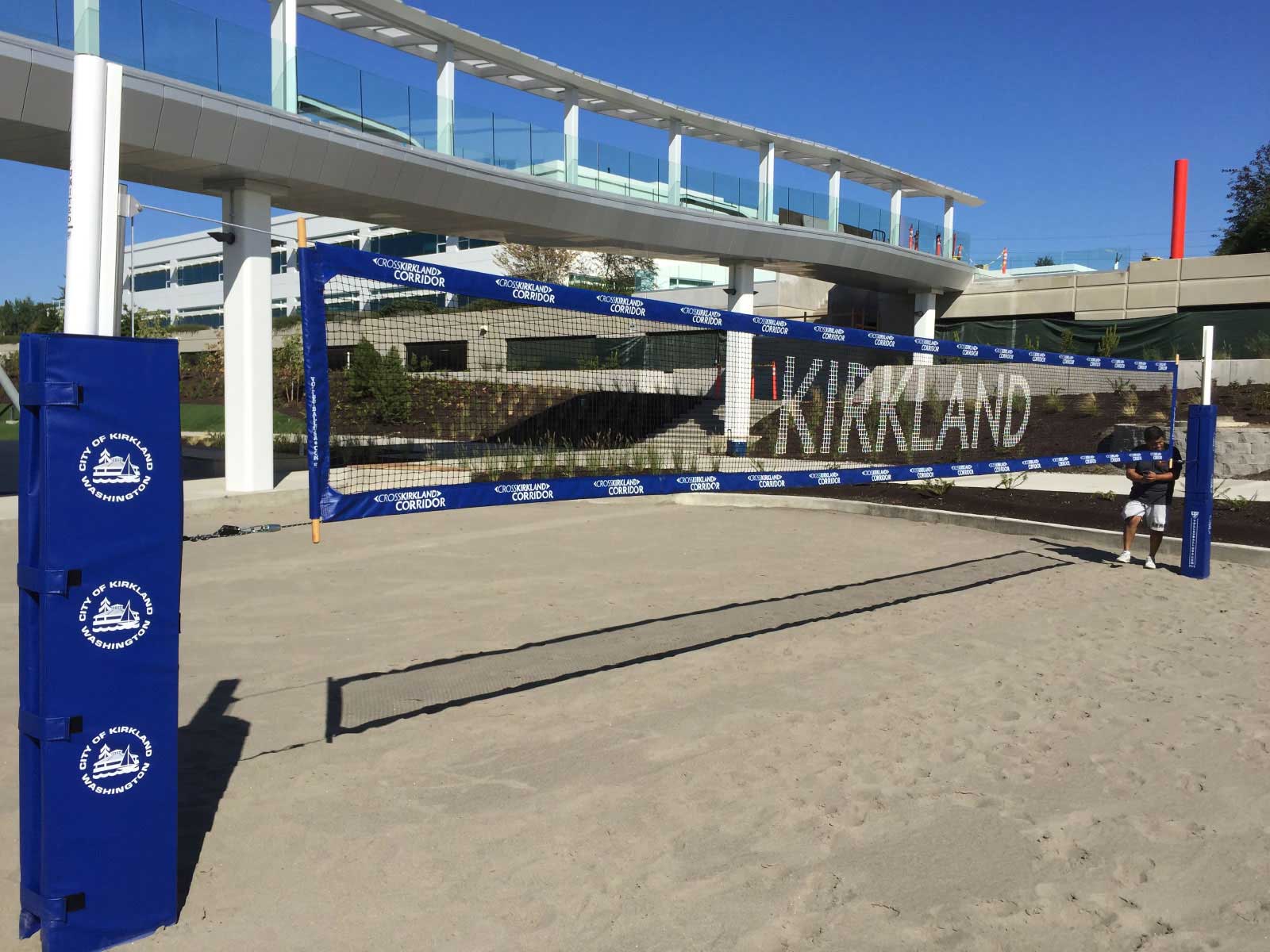 Kirkland Google Campus
 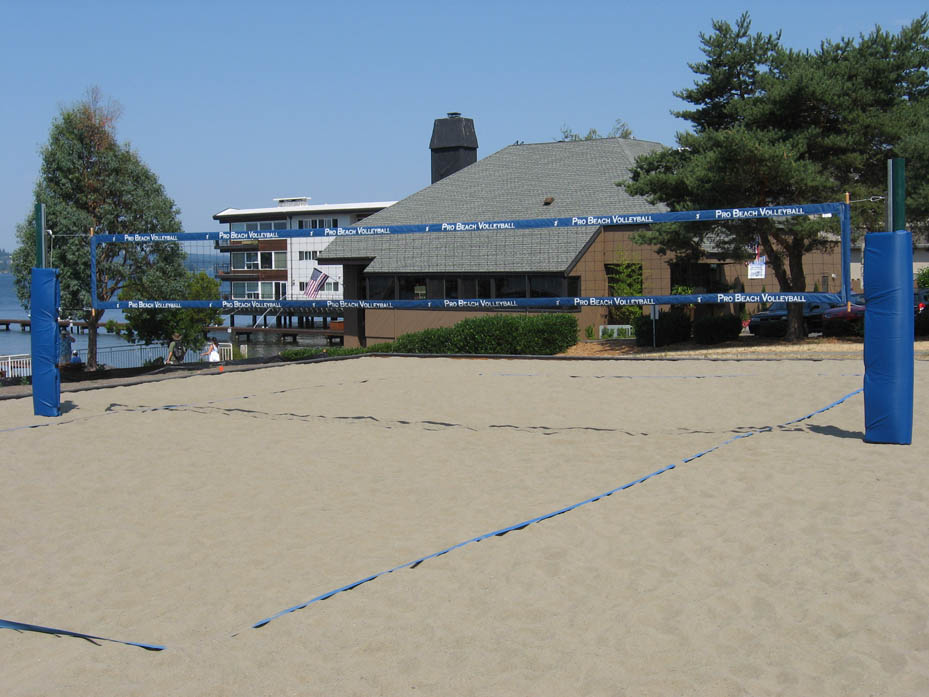 Houghton Beach Park Sand
 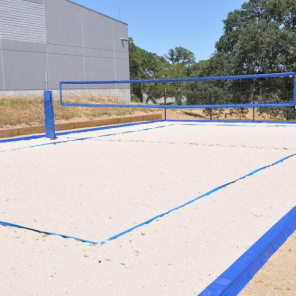 Company Court with EdgeGuard
 (5) Sand:
Sand has become a passion of ours due to the fact that we have seen so many beautiful volleyball courts over the years get built with horrible sand. Building a beach volleyball court with bad sand typically results in a court which doesn't get used. Bad sand for volleyball players is typically sand that compacts that leaves your knees and elbows bloody after diving. It’s abrasive so it scrapes the surface of your skin as you play. It’s dusty requiring you to play in a dust cloud that coats your nose and lungs as you play. Often times bad volleyball sand is compacting, abrasive and dusty. We get asked on occasion why certain courts are built that don’t get used. We will ask those asking the question if they have played on the courts. Often times that answer is no. When we ask them to give the court a try, they typically find the sand is poor quality or that players have to play hit and fetch chasing balls down hills, into bushes or into lakes.
If you want beach volleyball sand you should typically not use golf course bunker sand or washed masonry sand. You want a blend of ideal particle sizes with low dust. We have spent the past 10 years creating a distribution network of beach volleyball sand for sale throughout the United States and Canada to supply you with high quality volleyball sand without incurring excessive delivery costs. (Call 1-800-494-3933 for pricing)
When evaluating volleyball sand for purchase you want to check for abrasiveness, dust and particle shape.
To check abrasiveness you should wear shorts and test the sand with your knees in both dry and wet conditions by kneeling down onto it. If you are sincere about a good test try adding speed to this test and driving your knees into the sand with momentum. Your goal is to recreate volleyball plays and test how soft it is. You should also stomp on it on compacted ground to see if it packs or resists compaction.
To check for dust the sand must be very dry and you will throw handfuls of the sand in the air to see what residual dust cloud stays suspended. Some of the best volleyball sands we have tested have no visual dust cloud with this test.
When it comes to particle shape, I suggest you think of your eyes. There are a few volleyball sand reports online that call out for angular or sub angular sand. I don’t understand why they exist but angular and sub angular sand particles are like diamond shaped rocks. Ocean and river sand particles are typically round or sub round. Which of these sand particles would you prefer to rub on your skin or more importantly your eyeballs? If you play beach volleyball, you will get sand on your skin and in your eyes guaranteed. Ideal volleyball sand particles are round or sub round.
When installing sand to your area you will want to deposit one to two feet of volleyball sand over the area prepped for drainage and rake level. Your budget may dictate the depth of sand used but keep in mind if you go with a lesser depth, plan on raking or shoveling back sand from the sides of your "dished out court" to the middle about once a week or more (depending on how often the court is used).
The playing area alone will consume approximately 100+ tons of sand at a depth of approximately 12 inches. Many customers purchase between 100-300 tons per court depending on the size of their court and the depth they prefer. (Call us at 1-800-494-3933 for more detailed information and pricing)
Since sand is expensive to return once it's in your court, it will be there forever unless you pay to load it out with a tractor and ship it away. Please let us help you with your volleyball sand by calling 1-800-494-3933. We are happy to review gradation reports from local sand and gravel companies you get quotes from. In addition, we have spent years reviewing hundreds of sands from sand deposits all over the United States. If the deposit and manufacturing equipment is up to our standards, we will sell that premium beach volleyball sand for those with high quality standards.
(6) Poles:
Poles supporting the volleyball net should be made of stainless steel, anodized aluminum, galvanized steel, treated wood (6 x 6's or larger are preferred with sanded edges, 4 x 4's tend to bend too much) or other material that will withstand tension and not bend or break when stressed. It is also a good idea to pad the poles to protect players using your court and to give your court that cosmetic professional look.
Selecting Poles
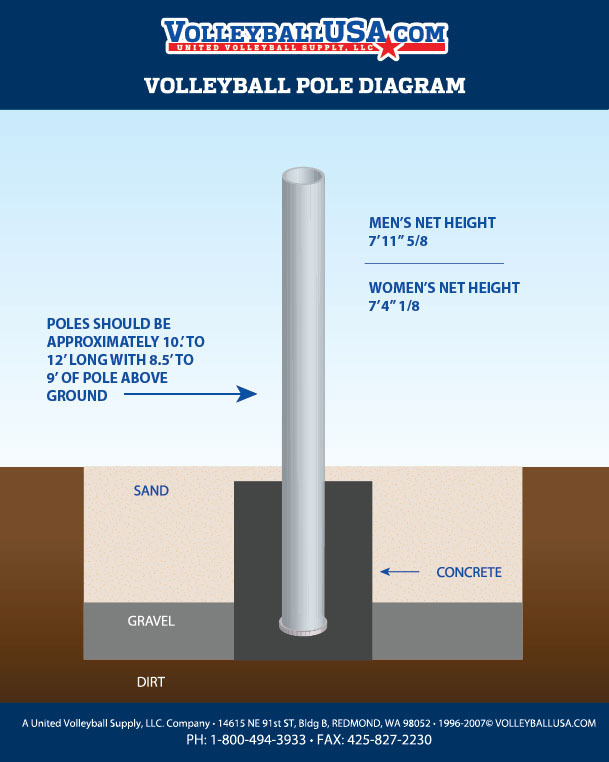 Volleyball Pole Diagram
  Sand Court Pole Options
 Poles should be approximately 10.5-16 feet long and cemented into a concrete footing measuring at least 1 foot in diameter and 3 feet deep (This can vary depending on how compact the soil is). The poles don't have to be cemented in place but should be. Poles should be free of hazardous protrusions. (Avoid making poles with eye bolts since prolonged volleyball net tension often brakes them off and results in sharp, rusty points coming off the poles) If you use guy wires, they should be made of bright colors or padded to prevent injury to players. All anchors for guy wires and boundary lines should be buried at least 12-18 inches under the surface of the sand and free of sharp edges.
Selecting a Net
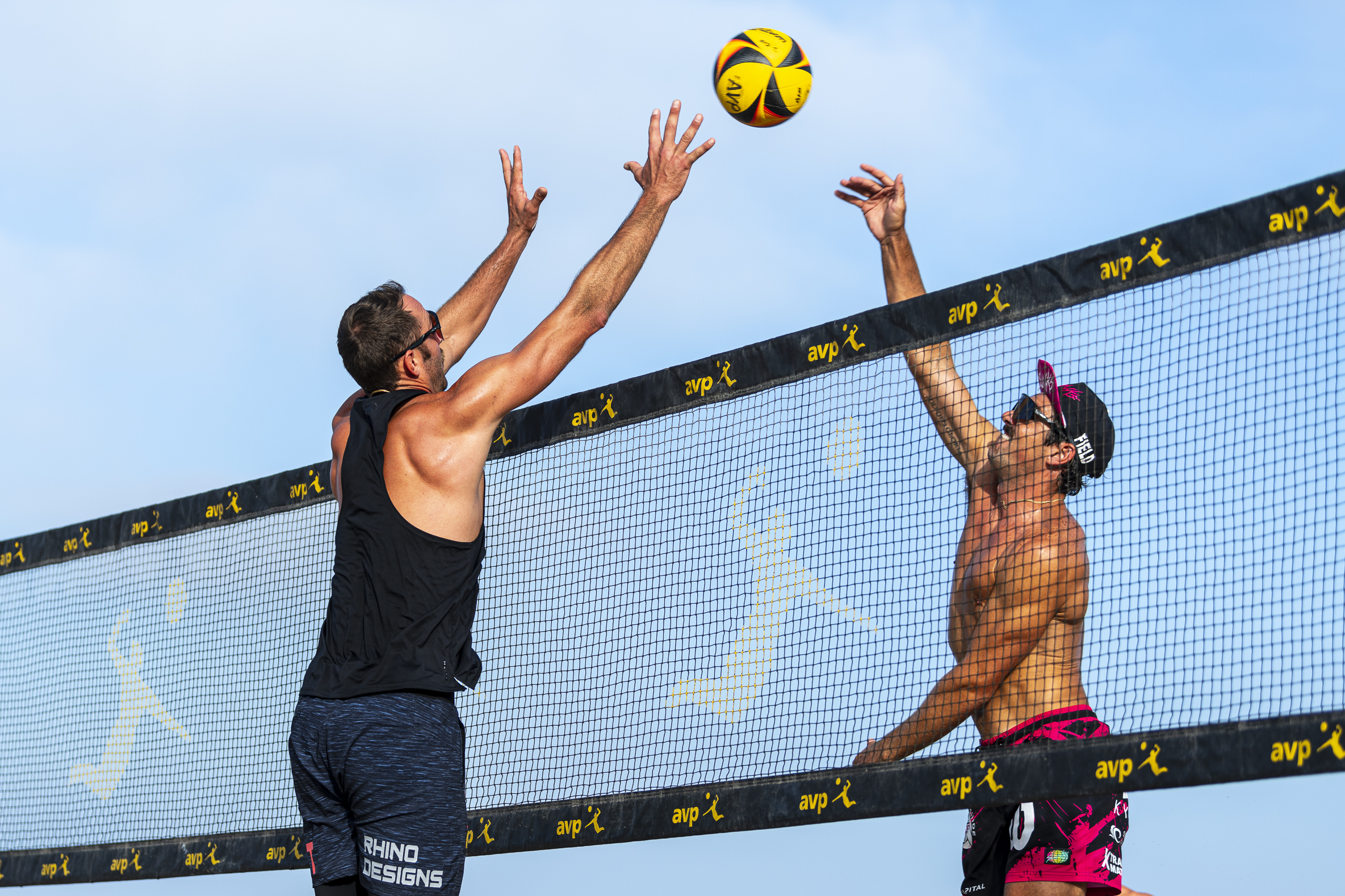 AVP Official Net
(7) Nets: Official outdoor nets measure 32 feet long by 39 inches tall. If you don't have the space for an official size net we can make a volleyball net any size you wish. The proper height for a men's net is 7' 11-5/8" (8 Feet) tall and for women it's 7' 4-1/8" (7 Feet 4 Inches) tall. Aircraft cables with fixed eye loops on both sides should be used on all permanent standing courts. This allows you to padlock your net to your poles and the aircraft cable provides added security since steel cable is much more difficult to cut down than a standard rope cable. Residential courts can use Kevlar cords or standard ropes if you wish to make your net easier to set up and take down.
Recommendations for Strong and Durable Volleyball Court
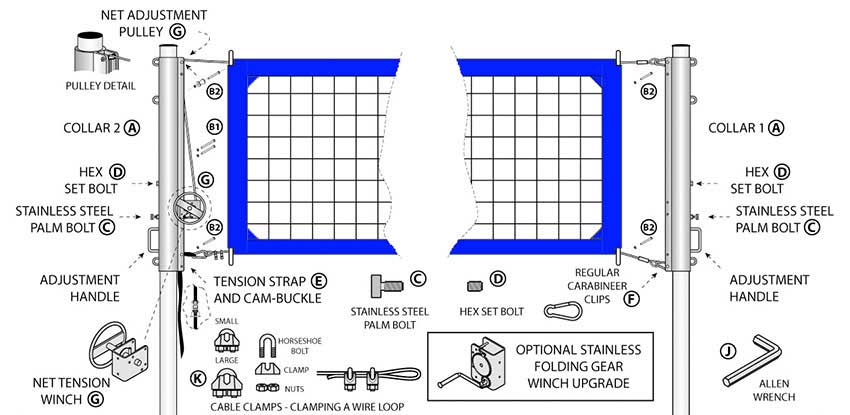 Outdoor Volleyball Net System
 POP - Bazooka Professional Outdoor Poles
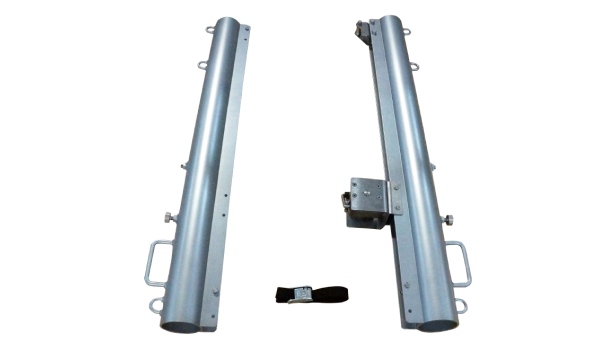 POP Bazooka Professional Outdoor Poles
Set includes heavy duty easy to adjust hardware. System can be adjusted with just one stainless steel palm bolt for any net height (volleyball, badminton, tennis, etc..)
- (2) 3.5 inch Outdoor Ultra Stiff Posts
- Choose between 12' anodized aluminum or 10.5' galvanized steel poles (either pole can be ordered in longer lengths if preferred)
- High Strength single unit hardware with stainless steel set screws and nuts
- Available with a powder coated or a completely stainless steel winch
- Single point adjustment, no ladder or chair needed.
- Perfect for sand courts and prolonged outdoor use.
- Top and bottom internal drive caps for poles
- Lockable winches to prevent vandalism and theft
- Available for side by side systems
- Posts can be permanently placed in the ground or you can purchase optional seamless heavy wall aluminum ground sleeves with removable caps
Volleyball Net - 4" Professional Beach Power Net
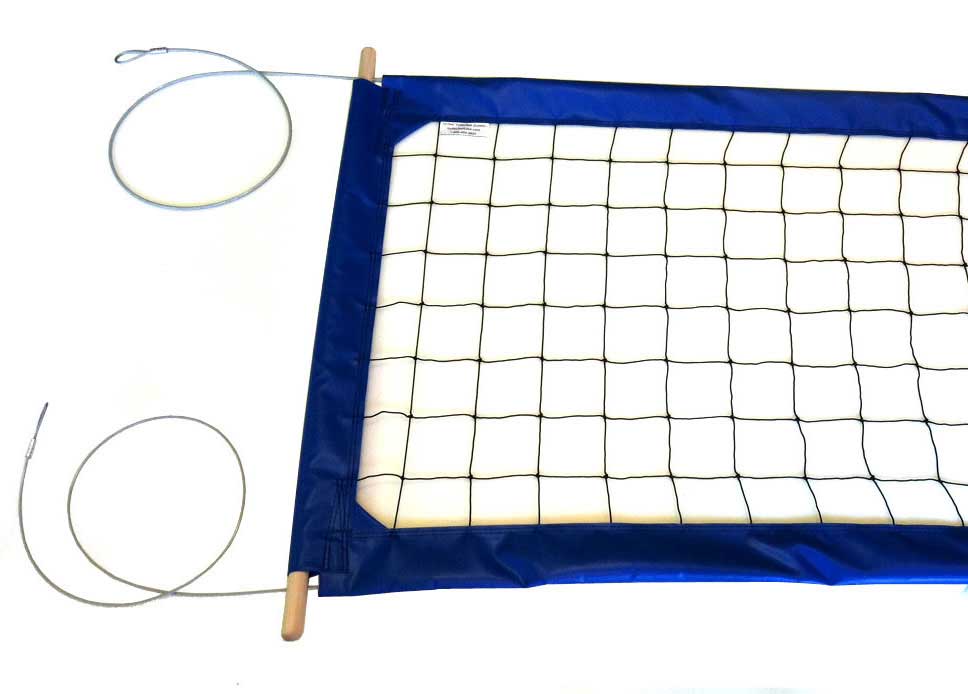 PBN4 - 4” Pro Beach Power Net
The Professional Pro Beach Power Net (PBN4) is a high quality volleyball net used by Division 1 Universities, Pro Tournaments, and home courts alike. The materials we use are Ultraviolet ray and mildew resistant, preventing color fading, weather damage, and ensuring prolonged outdoor use. Offered in 12 different color options, stronger and easier to handle cable alternatives, and 3 different side tensioners.
- 32 ft x 39 inches (available in custom widths for your court needs)
- Galvanized Steel Cables for top and bottom lines - 42 ft long (also available in Kevlar or Stainless Steel)
- Tie Rope side tensioners (available as Velcro Straps and Rope Ratchets
- #42 knotted nylon netting
- 22 oz. 4" tapes
- 1 - 1/8" maple wooden dowels
- Available in 12 colors
Professional Beach Boundary Lines
 Professional Beach Boundary Lines
Heavy duty webbing court boundary system, perfect for sand courts and prolonged outdoor use. Adjusts to official court size with plastic adjustable buckles on each side, allowing you to fine tune the court dimensions.
- Heavy weight webbing with stitched steel corner rings, center court markings, two hand winders for storange.
- (4) Five inch steel grass stakes with 2 ft of bungee cord
- (4) Plastic sand plates with 2 ft of bungee cord
- Permanently attached bungee cords enables the boundary to form perfect rectangle which stretches for safety
- Available in Blue, Red, Yellow and Black
Court Edging - EdgeGuard™
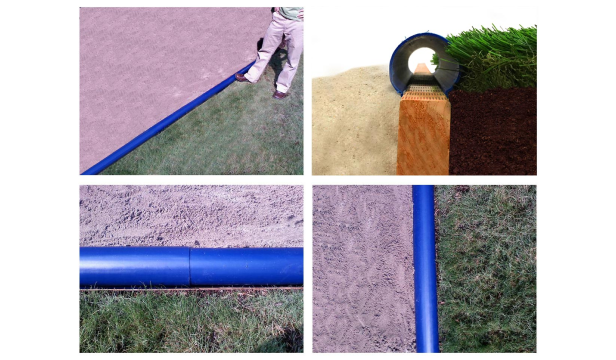 EdgeGuard™
Keep grass from growing into your sand with our EDGE GUARD™. Made with UV resistant plastic for years of outdoor exposure. Easily screws on top of 2 by 12 treated lumber with 1 inch cushion gap. No cutting needed.
- High Density Polyethelene Plastic (same as milk jugs, can be recycled)
- Available in Blue, Dark Green, Black, and Red (call for other possible colors)
- .10 Wall thickness to maintain cushion on warm days. (Some of our competitors sell .07 wall which doesn't protect in warm weather. It gets too soft with warm weather and compresses down to the wood.)
- Only $4 per foot
- Buying in bulk? We can discount down to $2.93 per foot.
- Call 1-800-494-3933 to order
Court Edging - EdgeGuard™
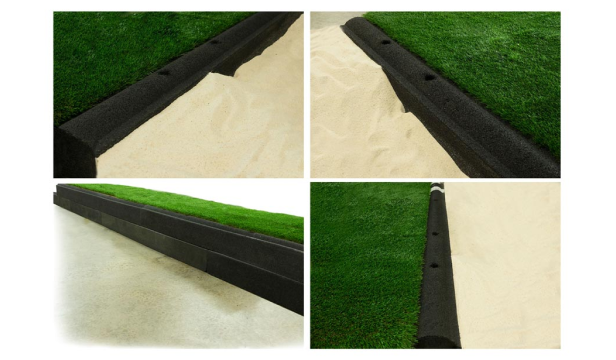 EdgeGuard™
 Volleyball USA Deep Basket Sand / Grass Ball Carts
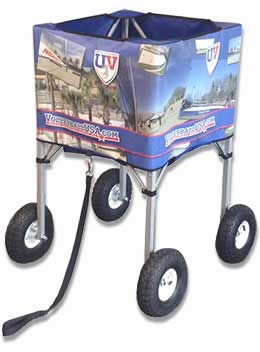 VolleyballUSA.com Ball Cart
Made per the request of coaches who want a non-rusting, strong aluminum frame ball cart with wheels capable of rolling easily in the sand and grass.
Wheels are designed to not swivel as our testing showed the swivel wheels in sand make the cart harder to pull and the non-swivel wheels easily displace the sand and go in the direction the cart is pulled.
- Includes removable pull leash which easily stores when not in use.
- Replaceable wheels
- Available in 12 colors of 18oz. vinyl
- Custom printed covers available for extra cost
- Call 1-800-494-3933 for pricing
Beach Volleyball Sand Maintenance: United Volleyball Supply's Grate Sand Device
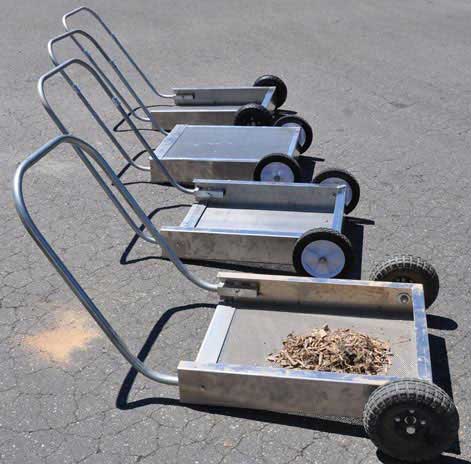 Grate Sand with Ease
Get clean "GRATE" sand, not "RAKED" sand! Simply pull the Grate Sand Device through the sand and lift the handle to a 45 degree incline. Fine beach sand drops right through while debris tumbles towards the back. Repeat as necessary.
- Available with different screen sizes (Fine, Medium, Coarse) to filter tree debris, coarse sand, garbage, etc.
- Made of galvanized steel and perforated aluminum
- Pneumatic wheels
- Interchangable screens for fine tuned sand cleaning
- Sand must be completely dry for best results
Court Enclosure - 3 ft Volleyball Court Perimeter Netting
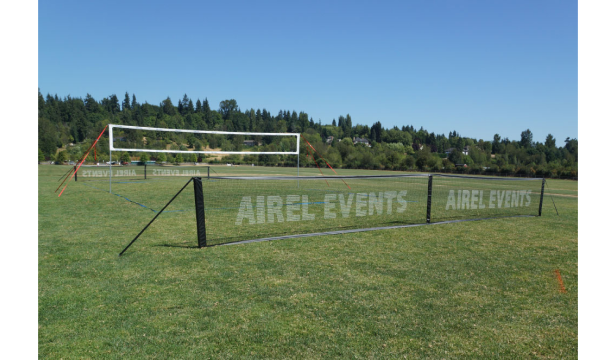 3ft Ball Stop Fence
- Don't chase after volleyballs!
- Play twice as many games in the same amount of time because you don't have to play hit and fetch
- A must have for commercial applications when trying to ammocodate lots of players or when you have only the space for one or a few courts
- We manufacture all of this equipment and can make packages to fit your court needs
Pricing
| Product | Retail Price | Our Guaranteed Low Price | Additional Info |
|---|---|---|---|
| High Quality Beach Volleyball Sand | N/A | Varies based on sand and location | We often have multiple choices per state and will ship free samples if our pricing is acceptable. Call 1-800-494-3933 for further information. |
| Pro Outdoor Standards | $995 | $590 - $16250+ | Many pole systems available. Call 1-800-494-3933 for further information |
| Outdoor Pole Pads (Set of 2) | $340 | $260 | Multiple styles available. Custom printed padding is offered as well. |
| Professional Power Net | $389 | $210 | Low to high quality nets available in up to 12 colors and custom lengths |
| Permanent Mounted Boundary Lines | $69 | $53 | Boundary lines available in 2" and 4" thickness |
| Edge Guard™ | $4 per foot | $2.93 per foot (bulk pricing) | Acts as a safety cushioned border around a sand court |
| Optional Court Enclosure | N/A | $73 to $4600+ | Keeps volleyballs close without having to play hit and fetch |
| Freight | Varies | Varies | Varies |
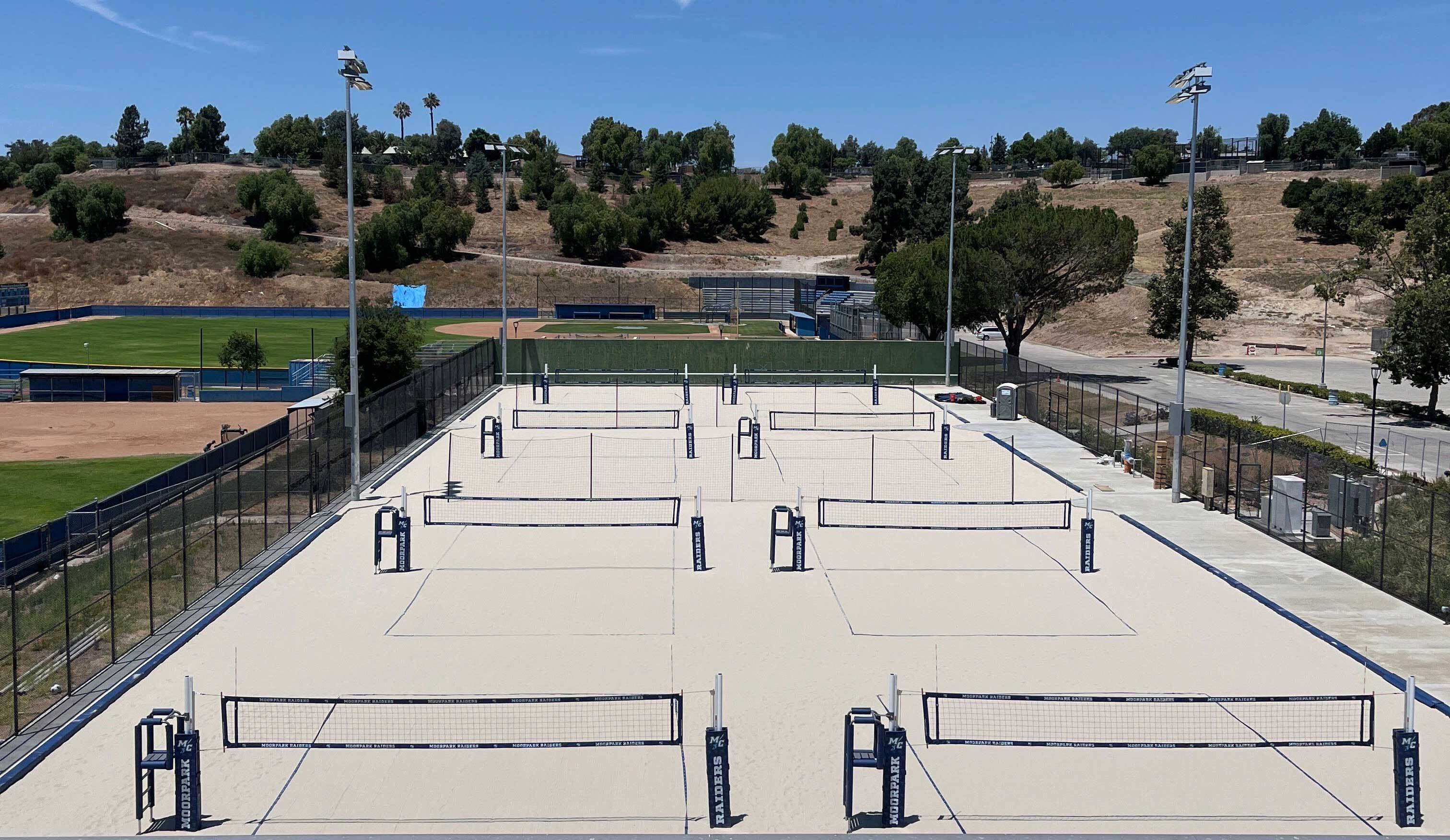 Moorpark College Courts
 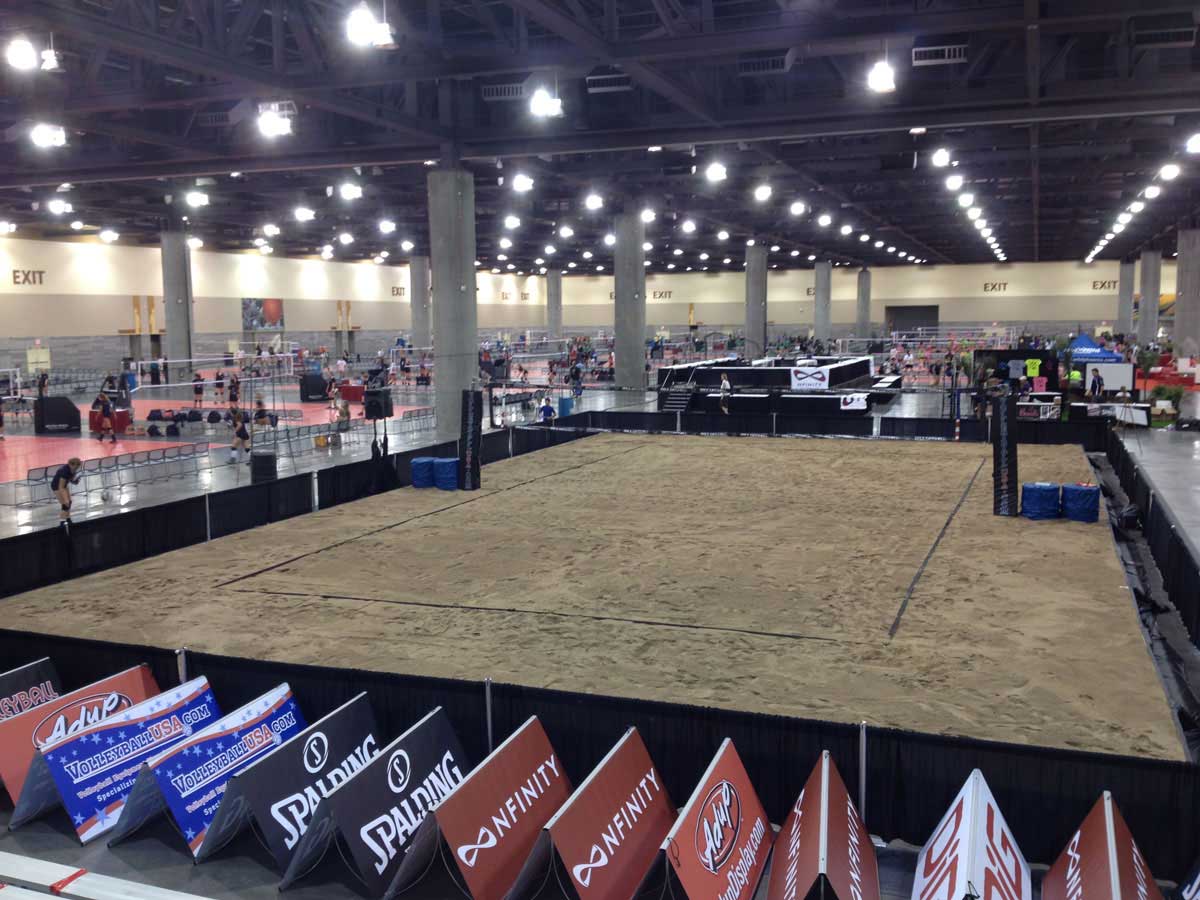 Phoenix Volleyball Festival
 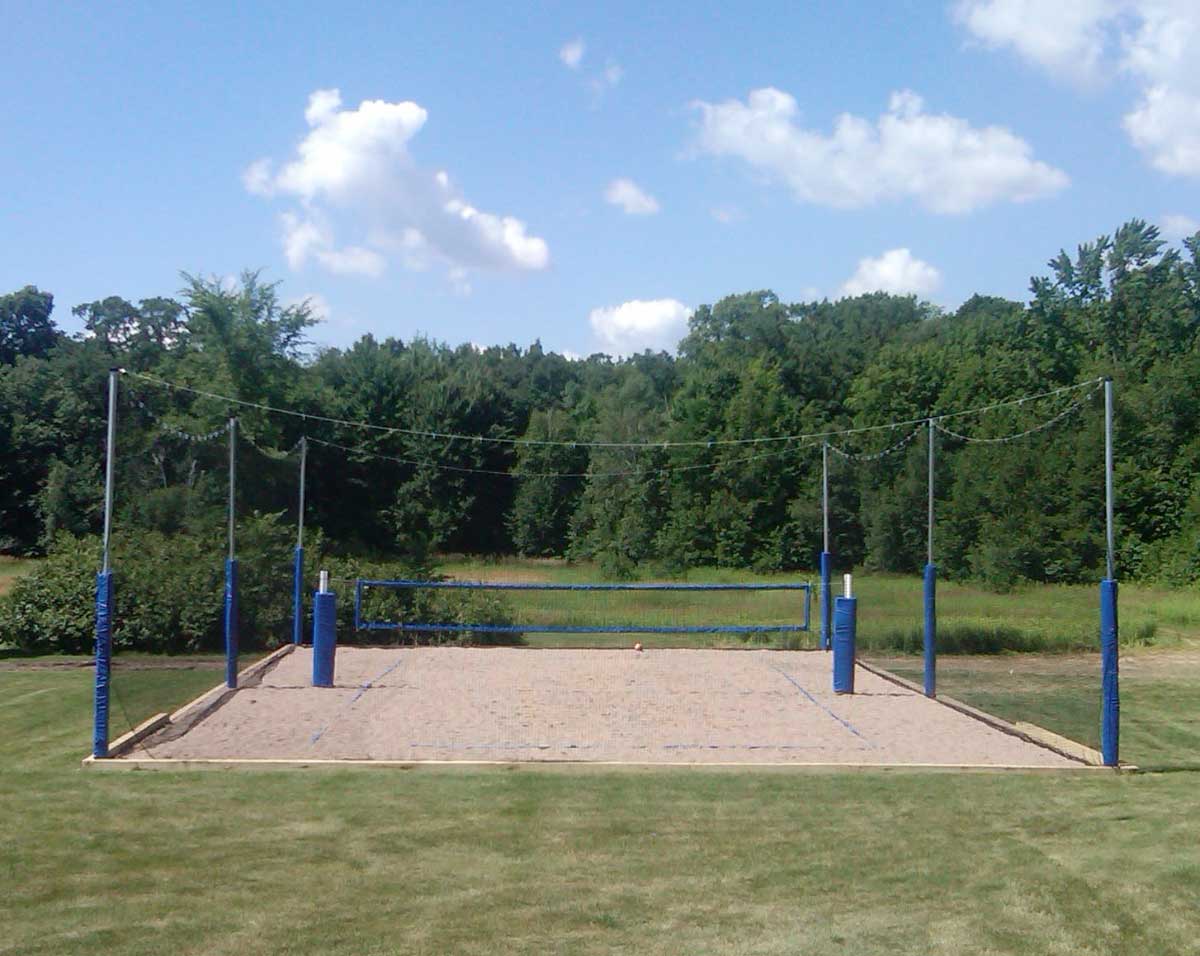 20 Foot Enclosure
  6 Foot Enclosure
  Aspire Higher Volleyball
 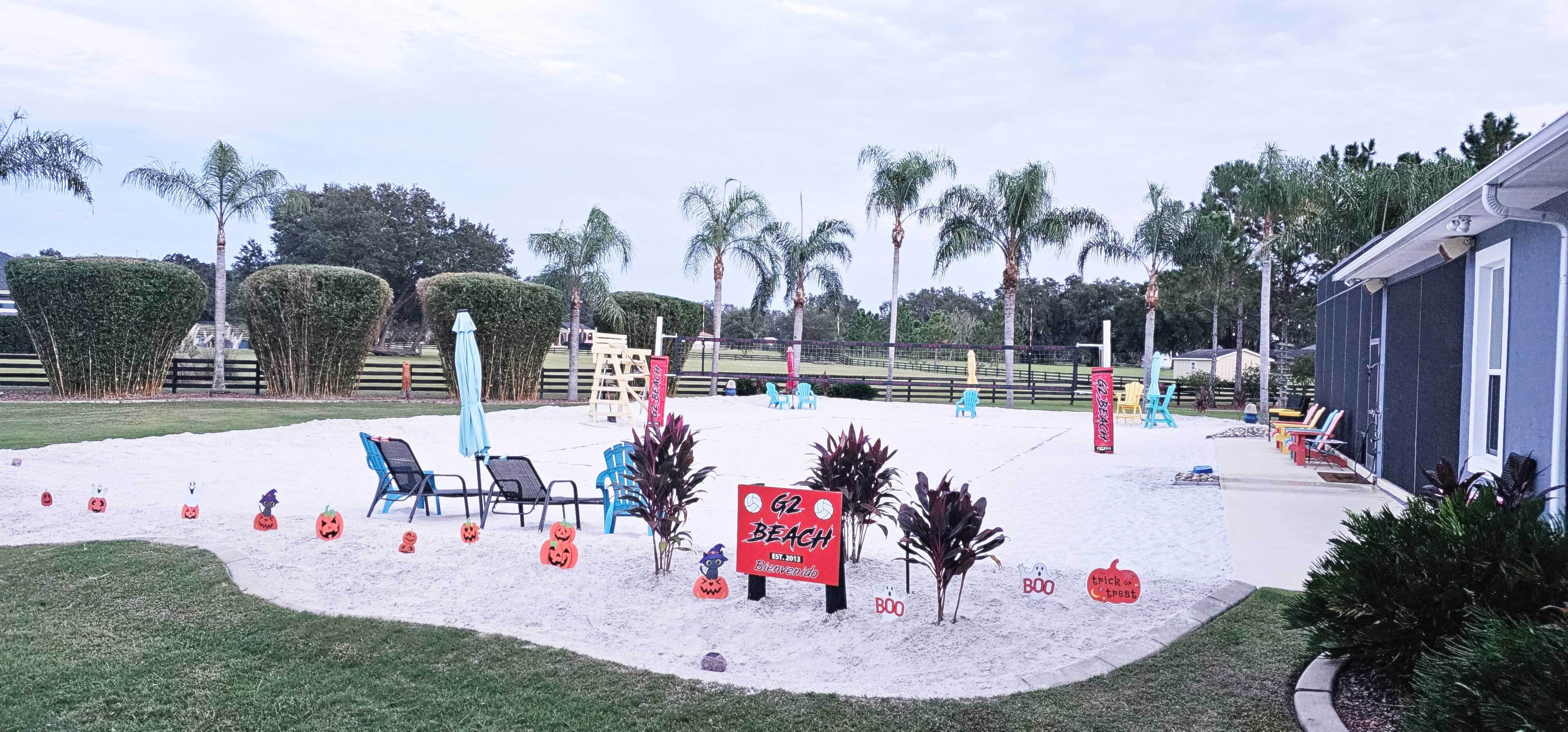 G2 Beach
 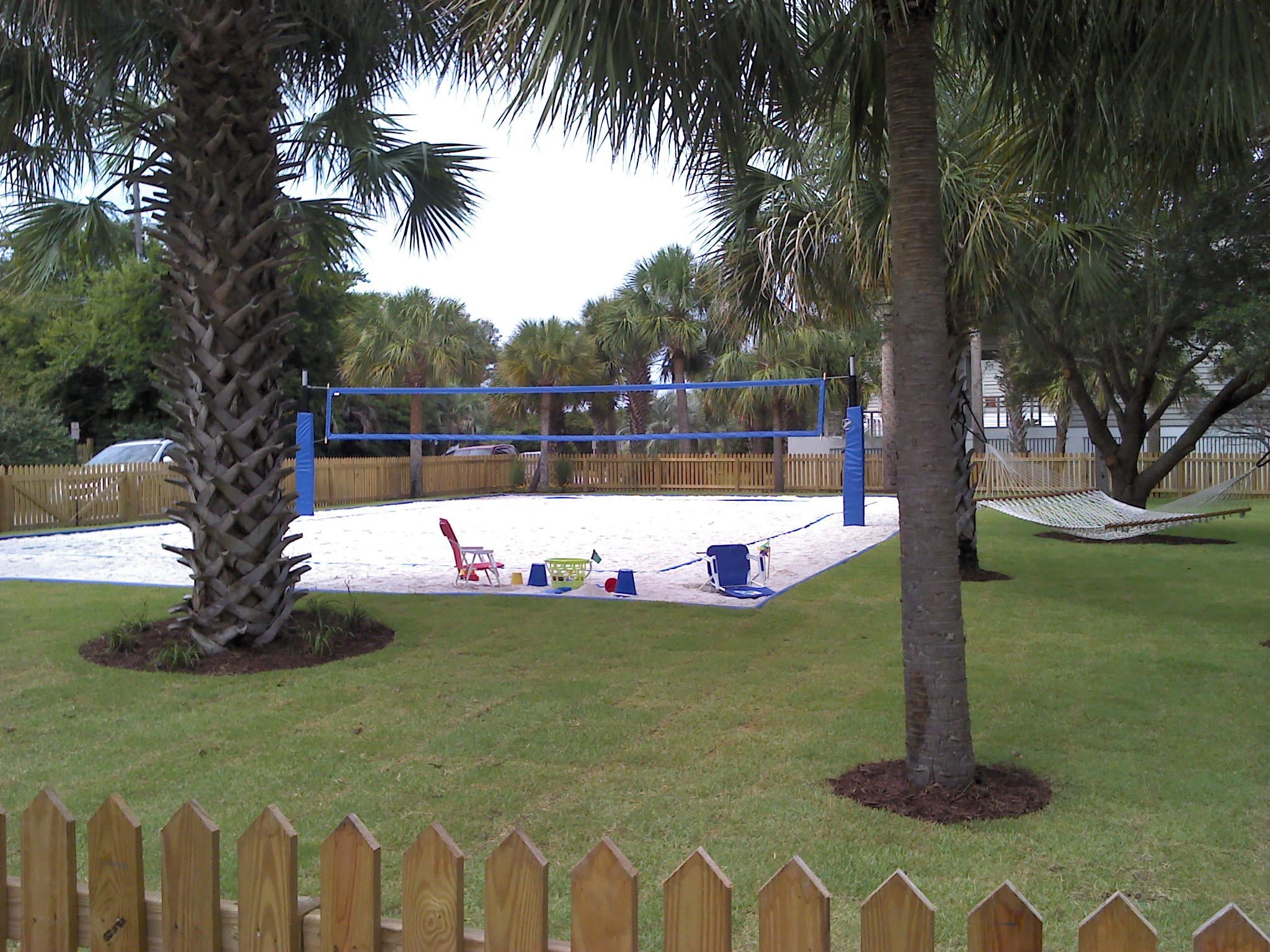 Backyard Beach Court
 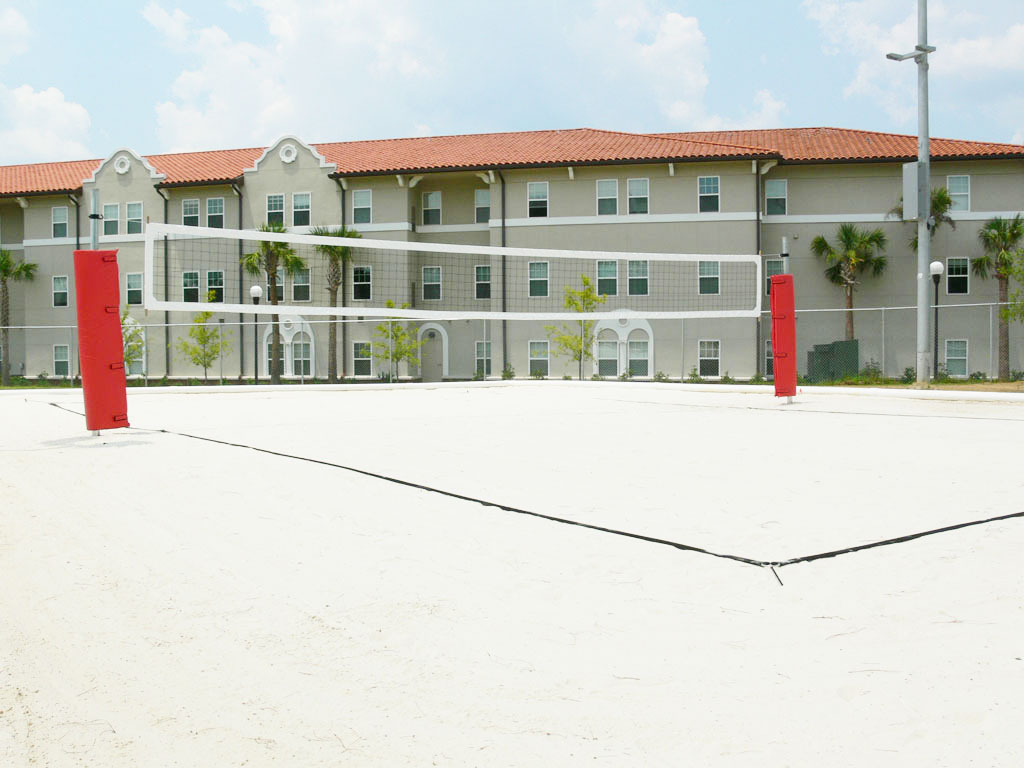 Apartment Volleyball Court
 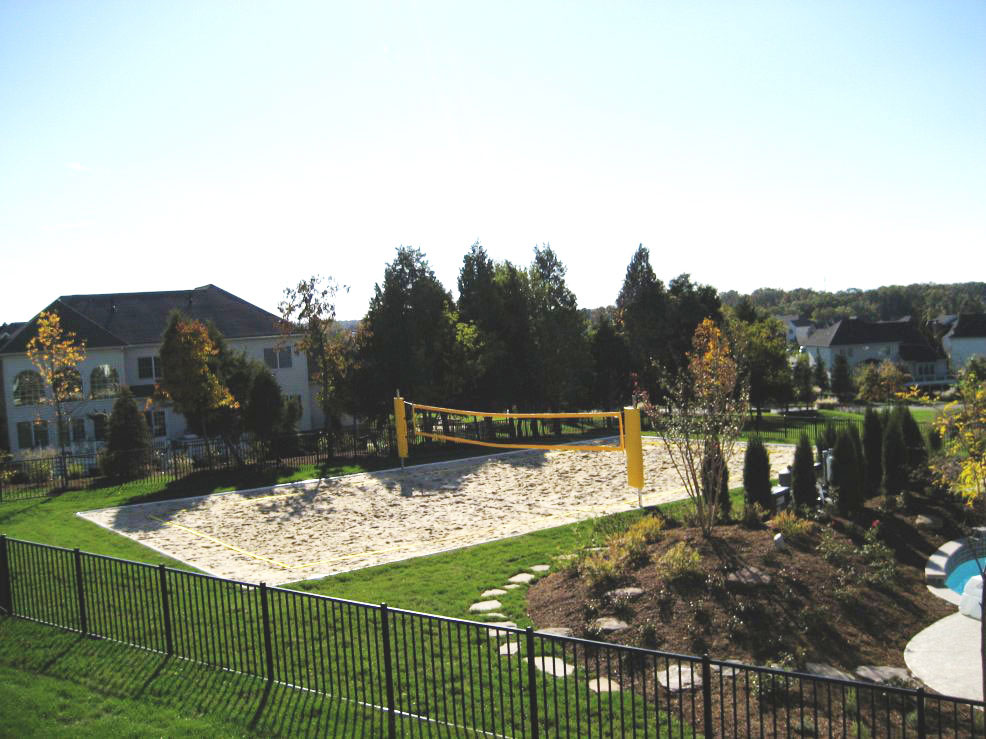 Backyard Beach Court
 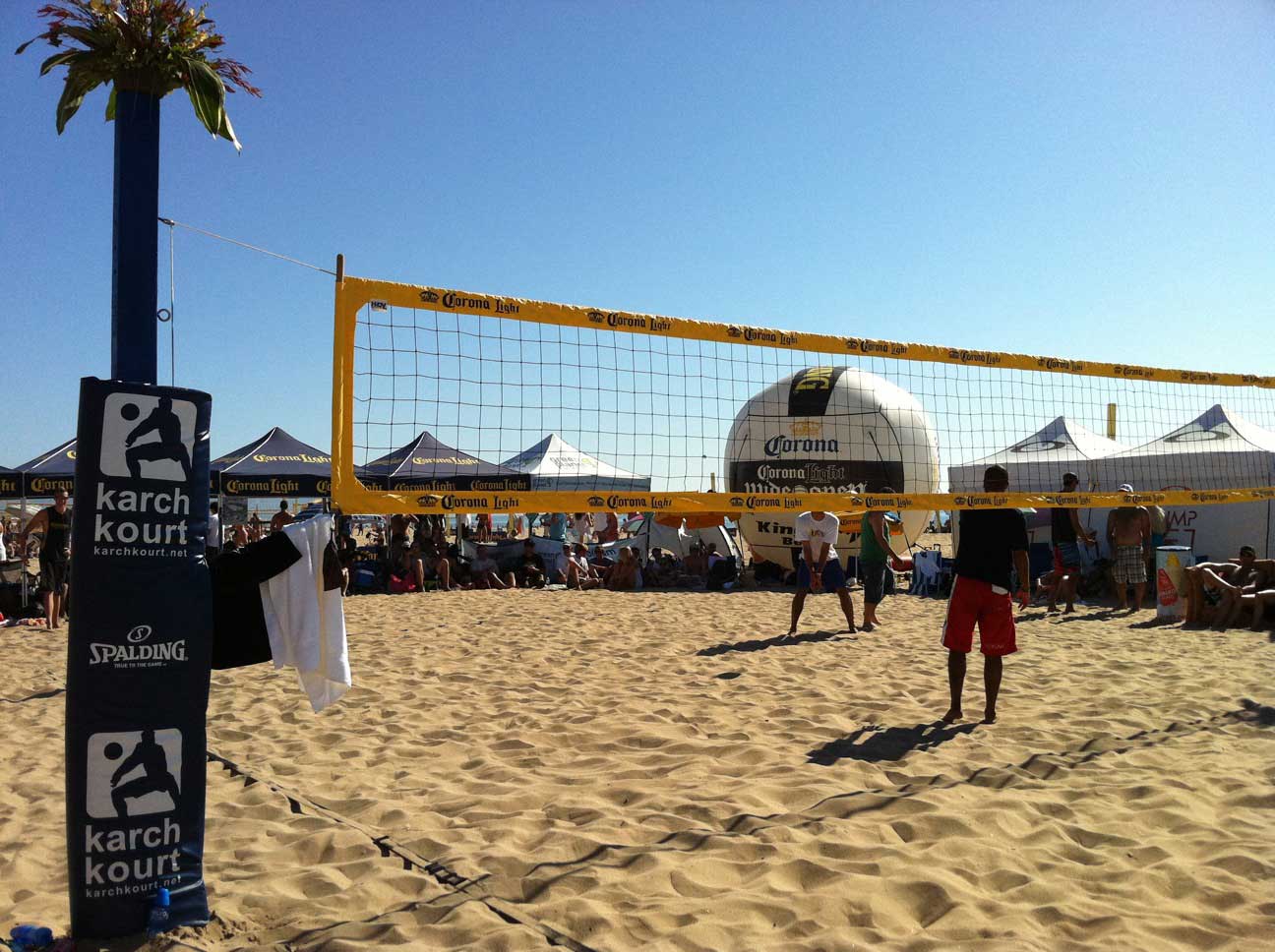 US Open Center Court
 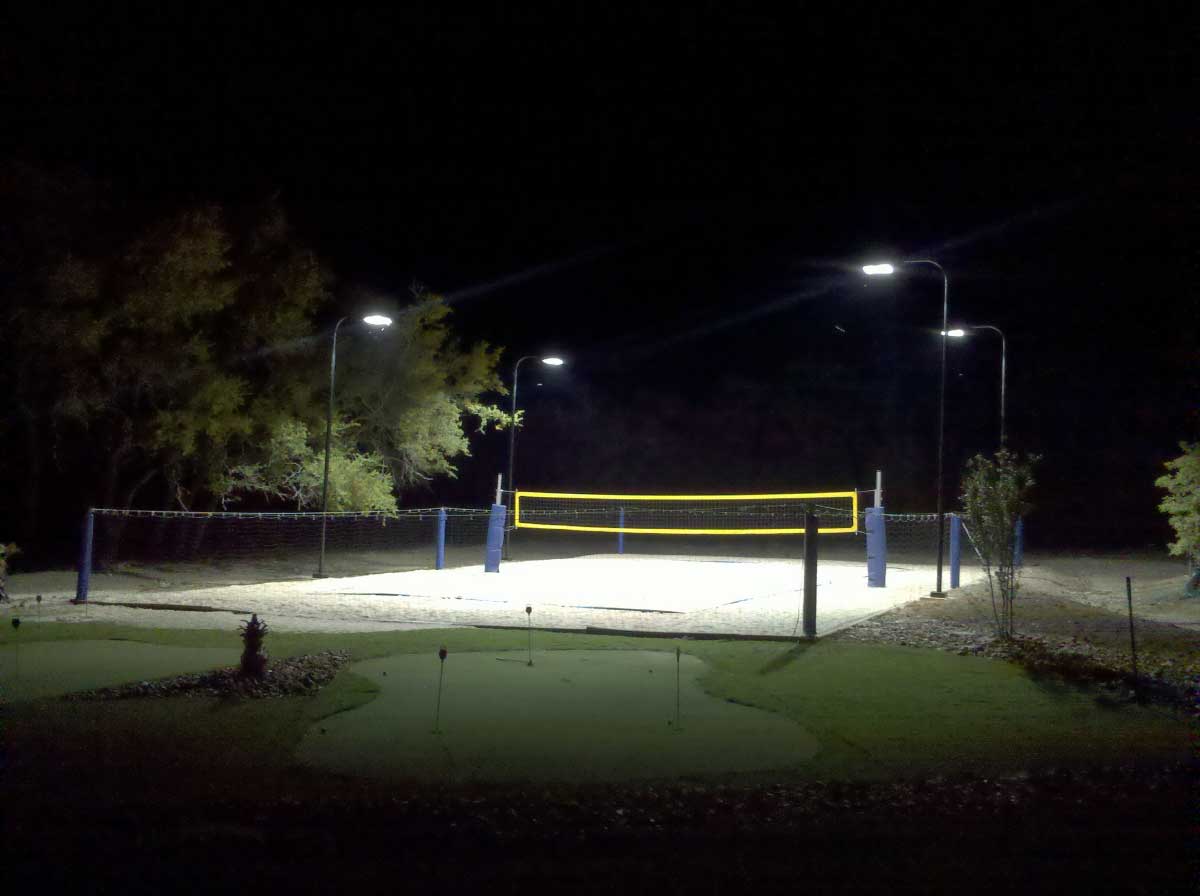 Lighted Volleyball Court
 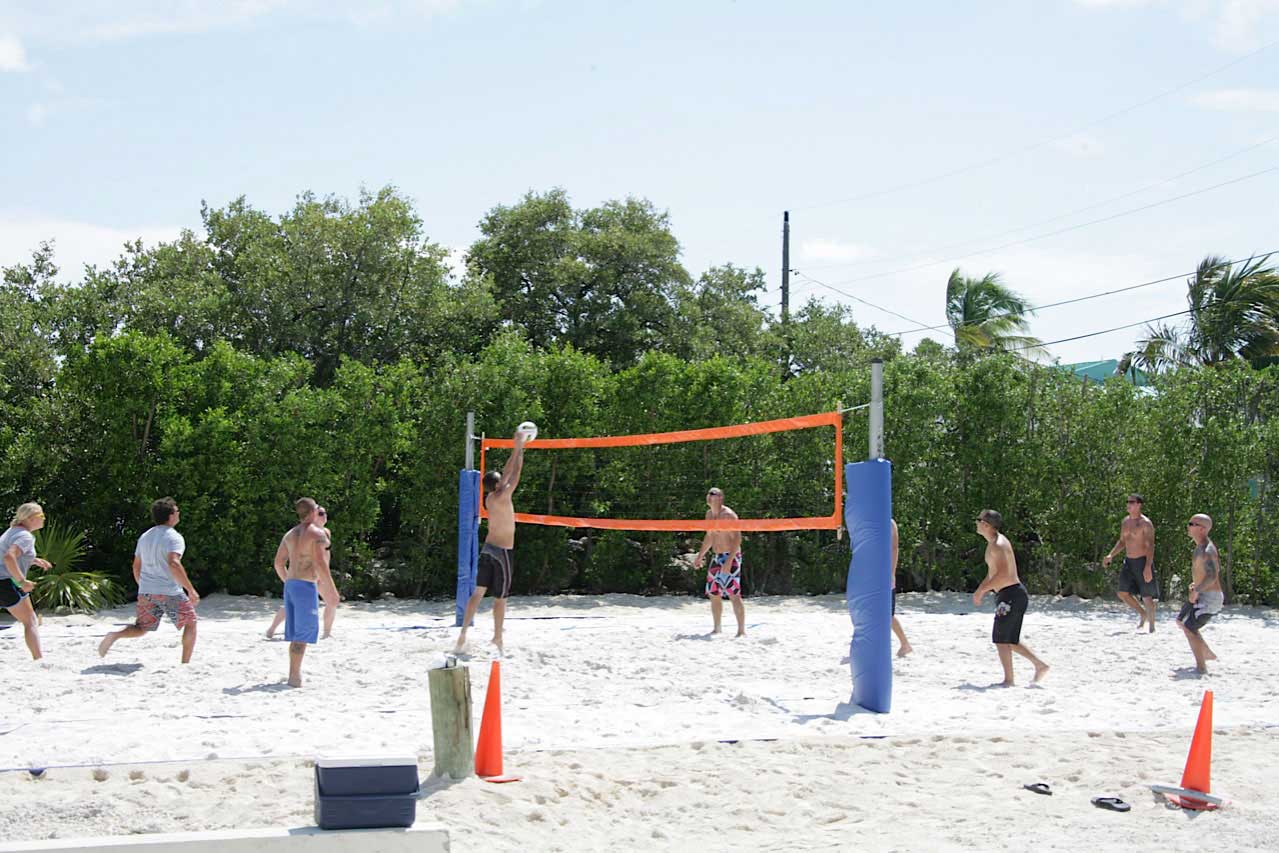 Florida Keys Court
 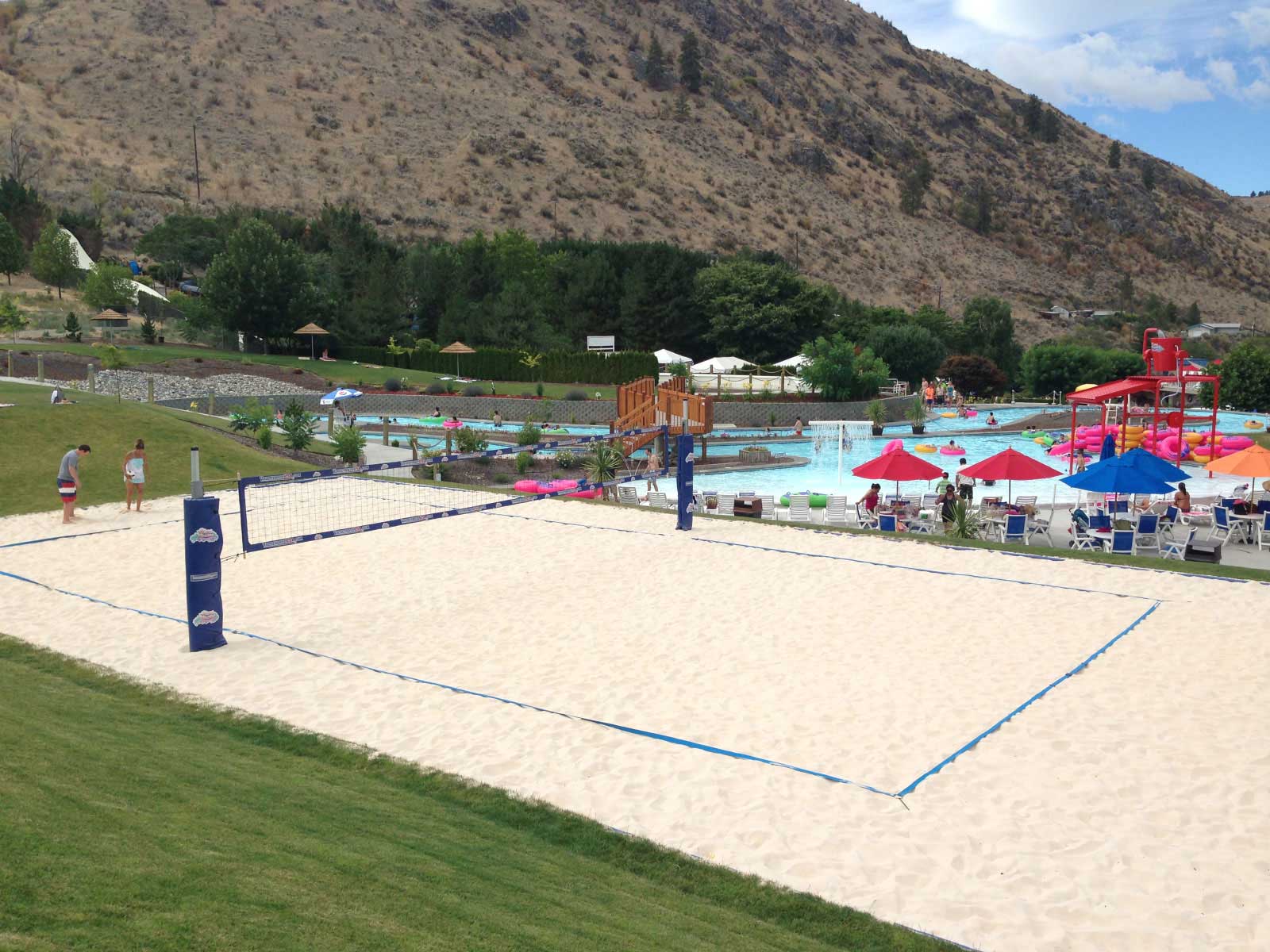 Slidewaters Court
 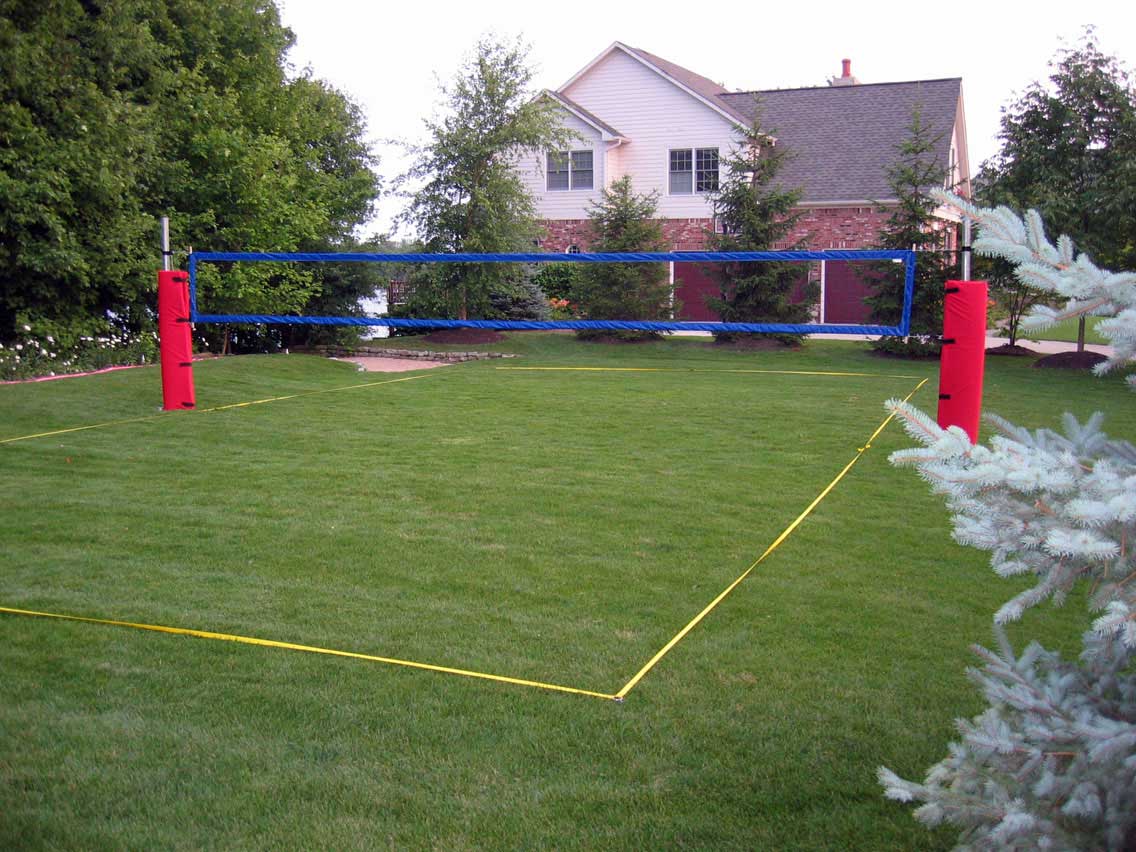 Backyard Grass Court
 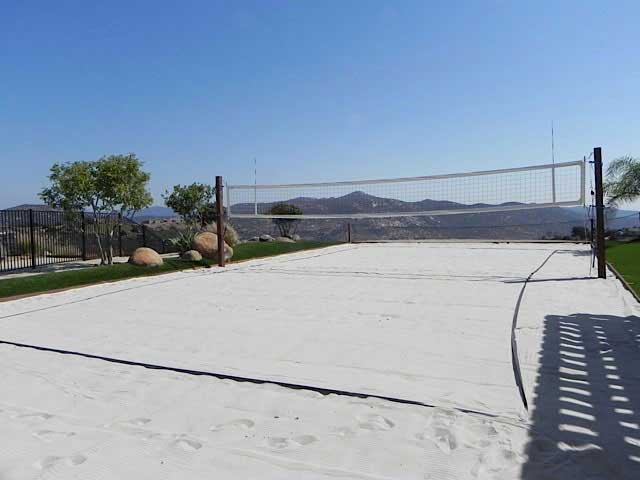 Professional Court
 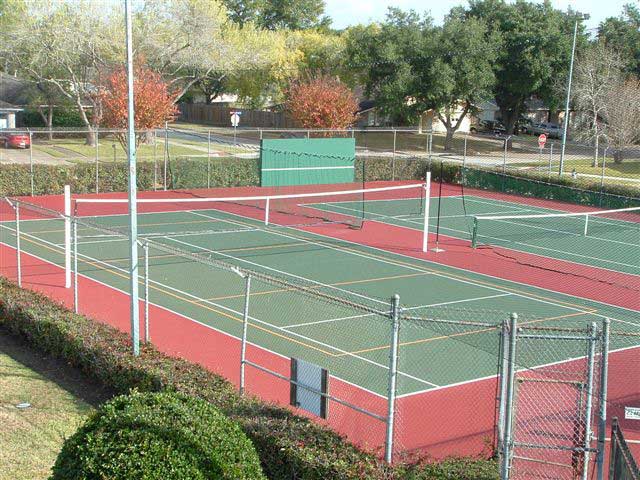 Multi-sport Courts
 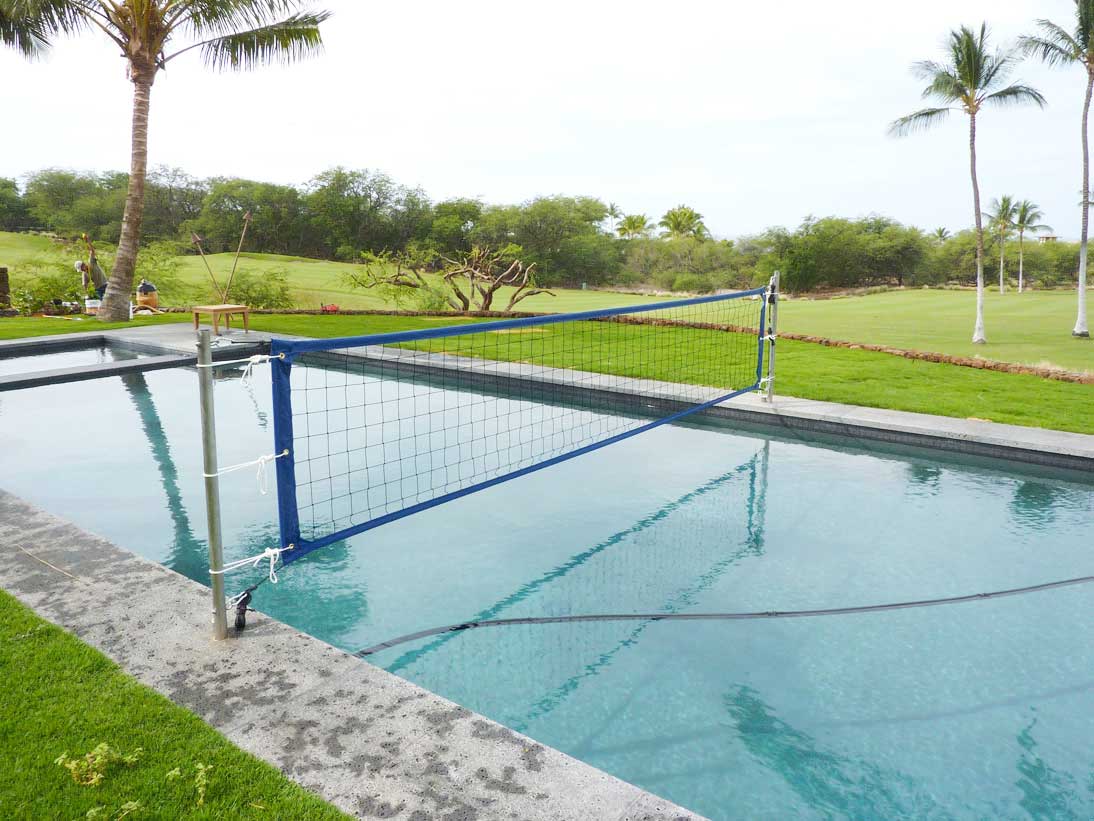 High End Pool Volleyball
 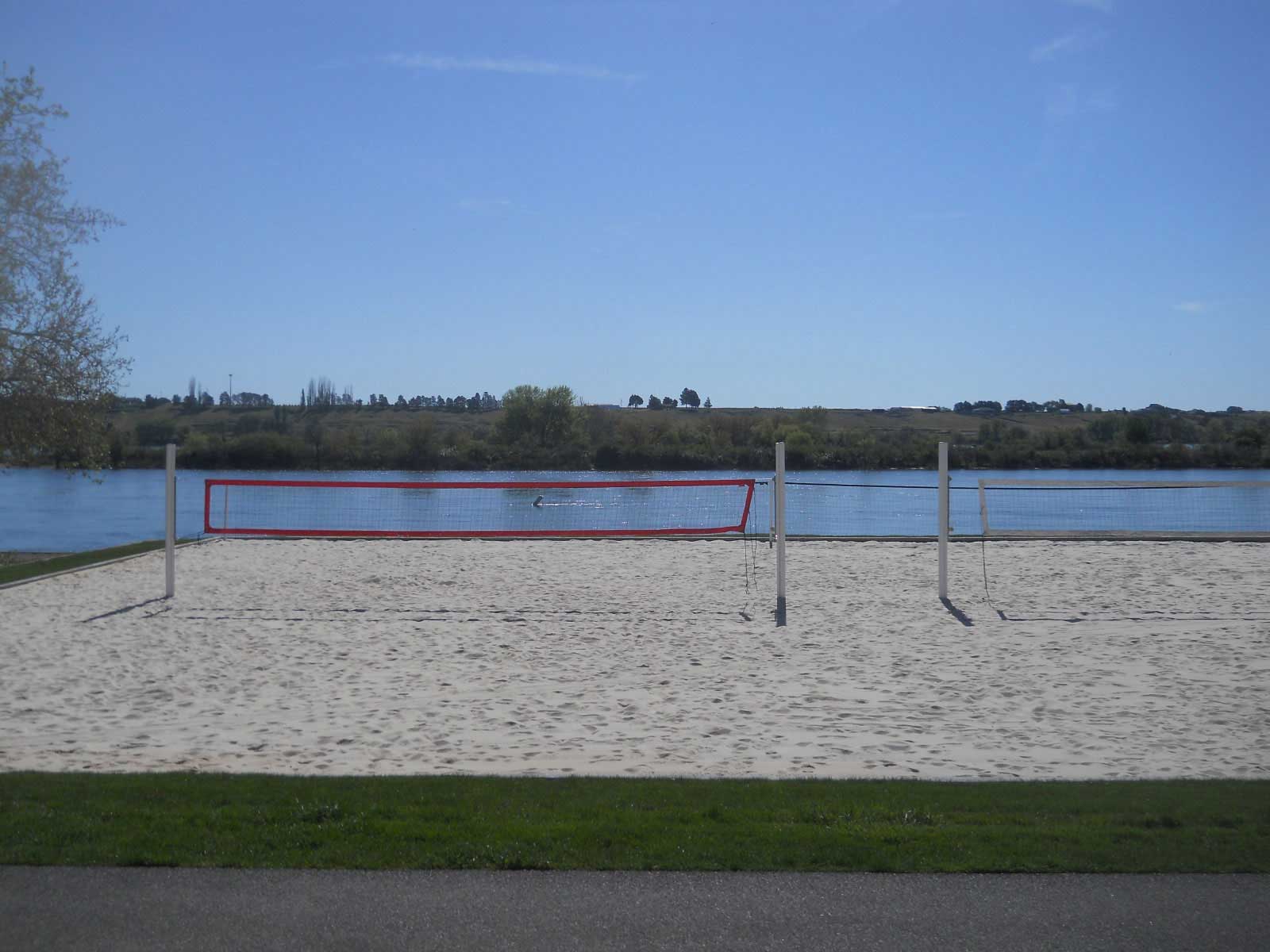 City of Richmond Court
 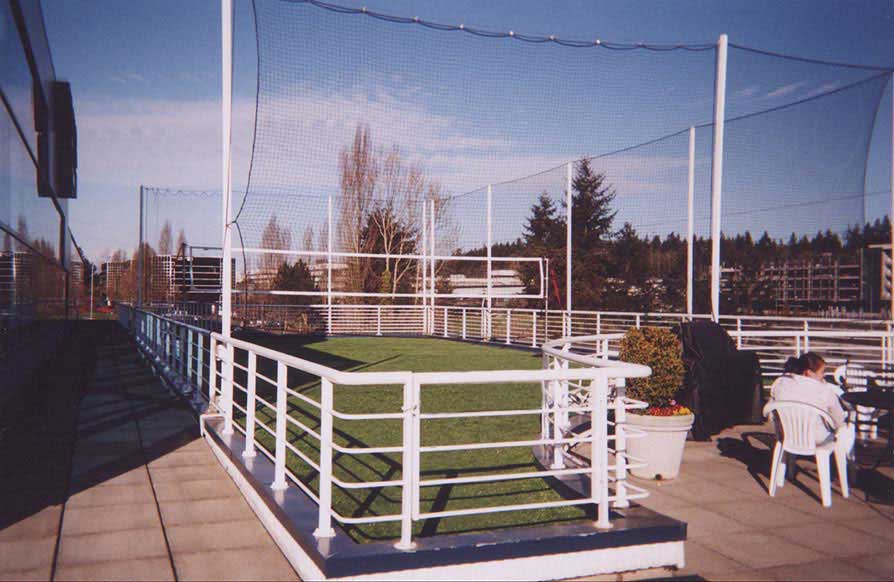 Professional Court